The Pink Edit: A Romantic & Expressive Wedding Colour Guide
Few colours carry as much emotion as pink. Soft yet confident, delicate yet expressive, pink sits beautifully between warmth and elegance. It has long been associated with affection and romance, but its history reveals something even more fascinating — pink has symbolised everything from aristocratic luxury to rebellion, tenderness, and power.
In wedding design, pink is endlessly versatile. It can feel airy and romantic, earthy and modern, or bold and dramatic depending on the shade you choose.
A Brief History of Pink in Weddings
Pink has one of the most intriguing histories of any colour. Unlike most colours in the spectrum, pink does not exist as a single wavelength of light — it is created by the way our eyes interpret a mix of red and violet light. In other words, pink is a colour shaped by perception.
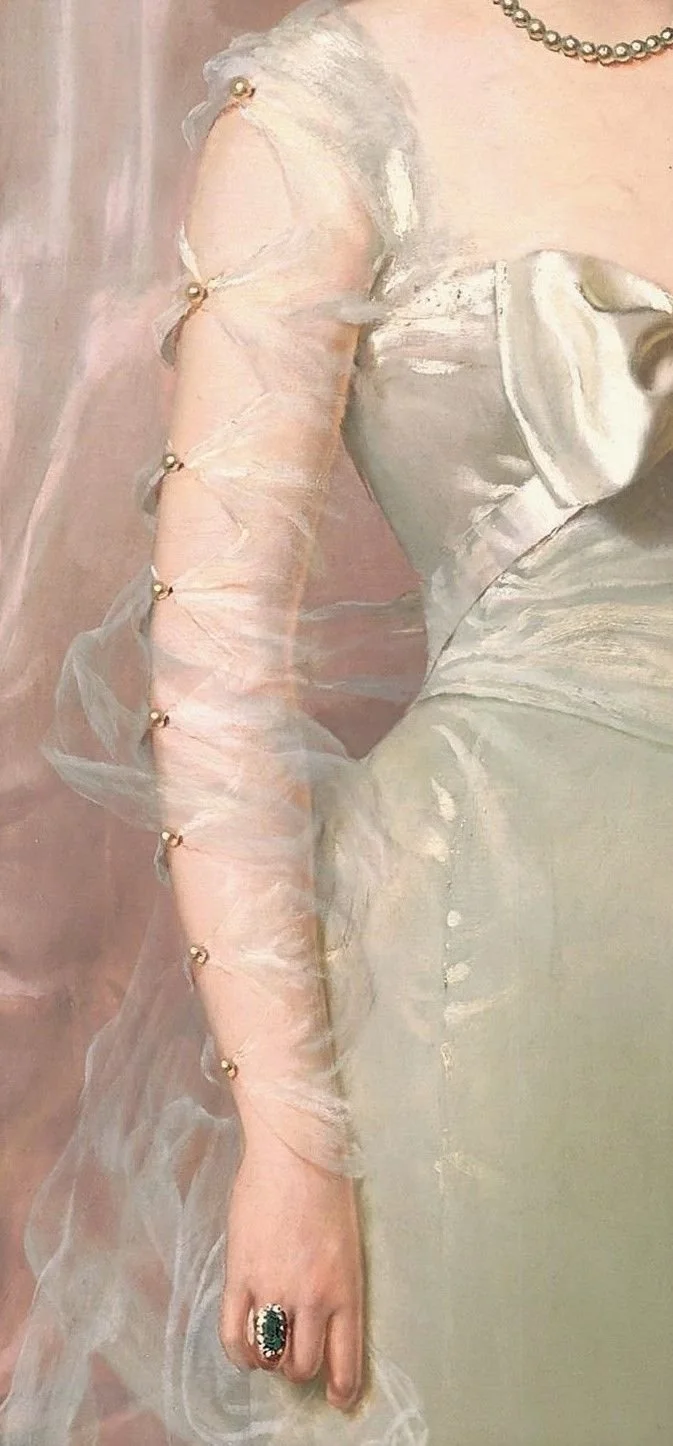
The word itself appeared relatively late in language, emerging in the 17th century and originally referring to a type of flower with delicately fringed petals. Artists had already been using pink for centuries, particularly during the Renaissance, when painters mixed red and white pigments to create lifelike skin tones.
By the 18th century, pink became synonymous with elegance and aristocratic taste. At the French court, Madame de Pompadour helped popularise delicate pink tones in art, fashion, and porcelain, even inspiring the famous “rose Pompadour” shade produced by the Sèvres porcelain factory.
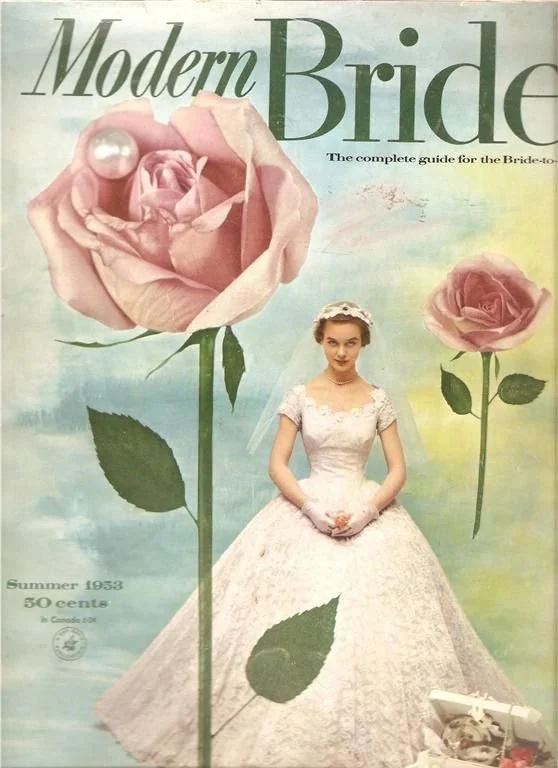
Interestingly, pink was not always considered feminine. Because it derived from red — historically associated with strength and power — pink was once recommended for boys, while blue was seen as softer and more suitable for girls. Only in the mid-20th century did cultural norms shift to associate pink primarily with femininity.
Curious Facts
Pink is not technically a spectral colour — it exists only because of how the human brain interprets light.
The earliest pink pigments were created from madder root, used as a dye as far back as ancient Egypt.
Pink flowers often symbolise grace, joy, and admiration, which is why they are so frequently used in wedding florals.
In design psychology, softer pink tones are known to create feelings of calmness, warmth, and emotional connection.
Pink has also been used historically as a colour of rebellion and activism, becoming a powerful cultural symbol in the late 20th century.
Cultural Meanings of Pink:
Japan: cherry blossoms symbolise renewal and the fleeting beauty of life.
India: pink is linked with hospitality and celebration — Jaipur is famously known as the “Pink City.”
Mexico: the vibrant shade “Rosa Mexicano” represents cultural identity and artistic expression.
Western symbolism: pink represents affection, tenderness, compassion, and romance.
Across cultures, pink consistently communicates warmth, connection, and emotional expression.
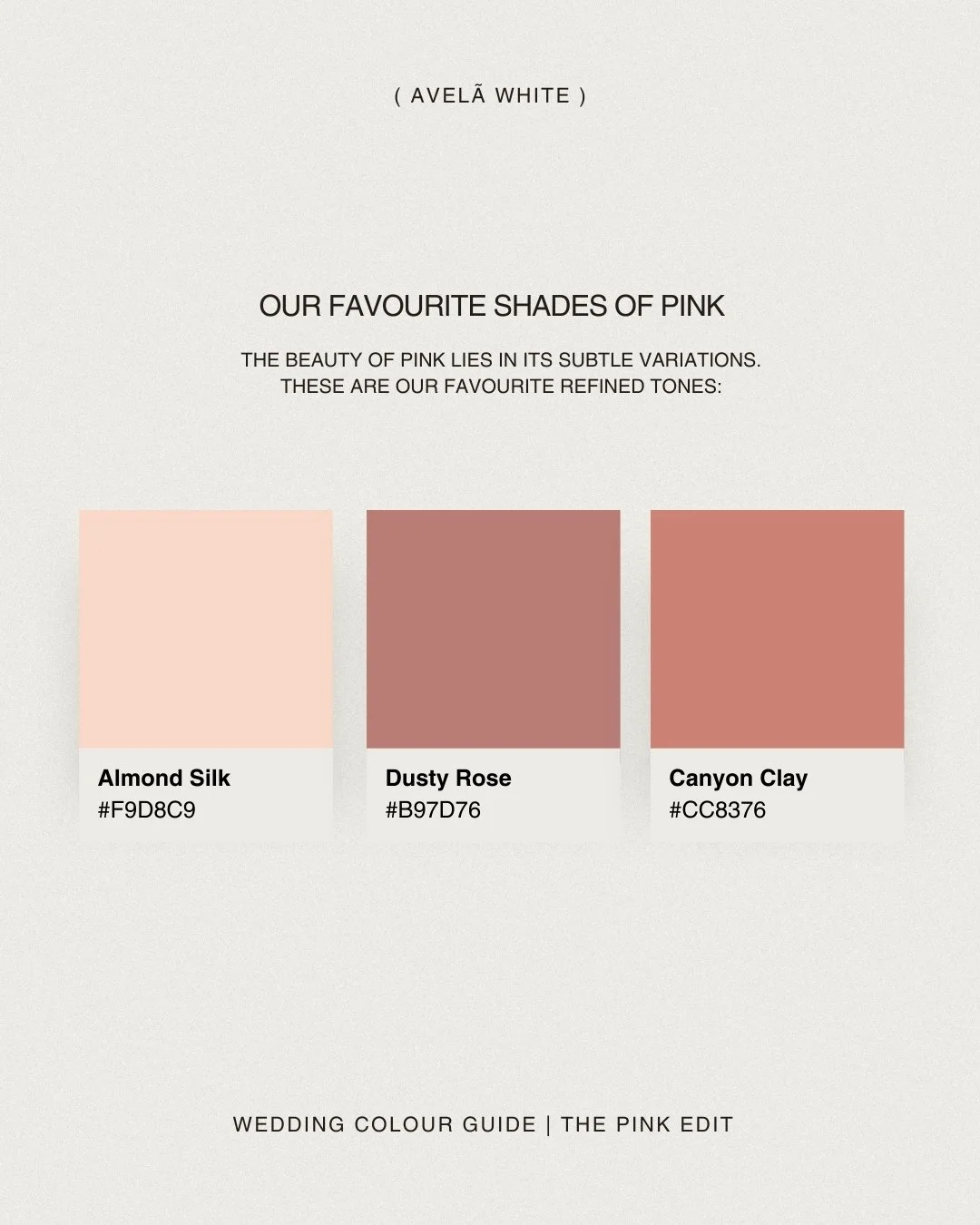
Our Favourite Shades of Pink
Almond Silk — A soft, creamy pink that feels warm and delicate. Perfect for romantic, airy weddings and elegant stationery.
Dusty Rose — Muted and sophisticated, this shade carries vintage elegance and depth.
Canyon Clay — Earthy and expressive, somewhere between terracotta and rose, ideal for modern palettes with warmth and character.
How We’d Use Pink
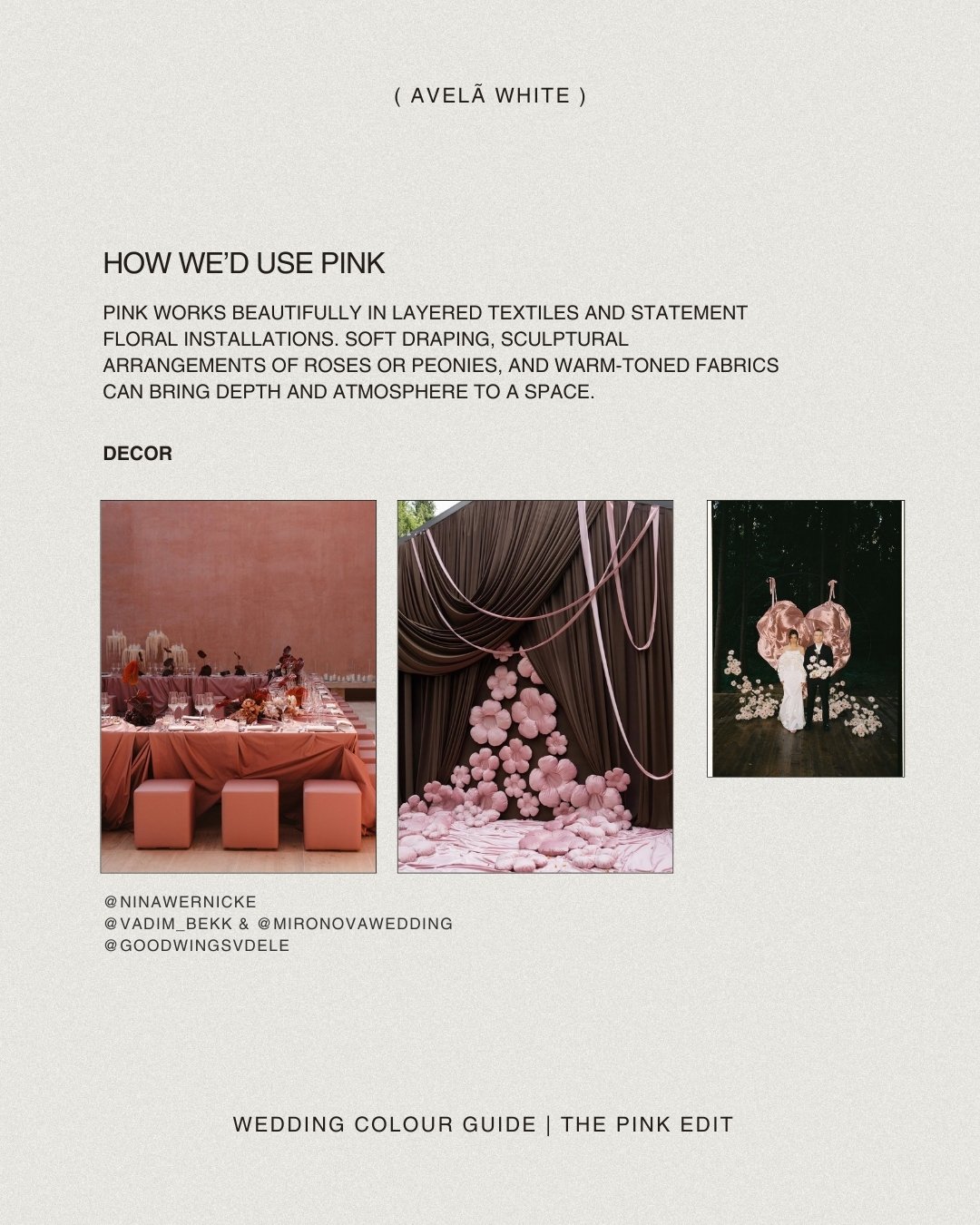
Decor
Pink works beautifully in layered textiles and statement floral installations. Soft draping, sculptural arrangements of roses or peonies, and warm-toned fabrics can bring depth and atmosphere to a space.
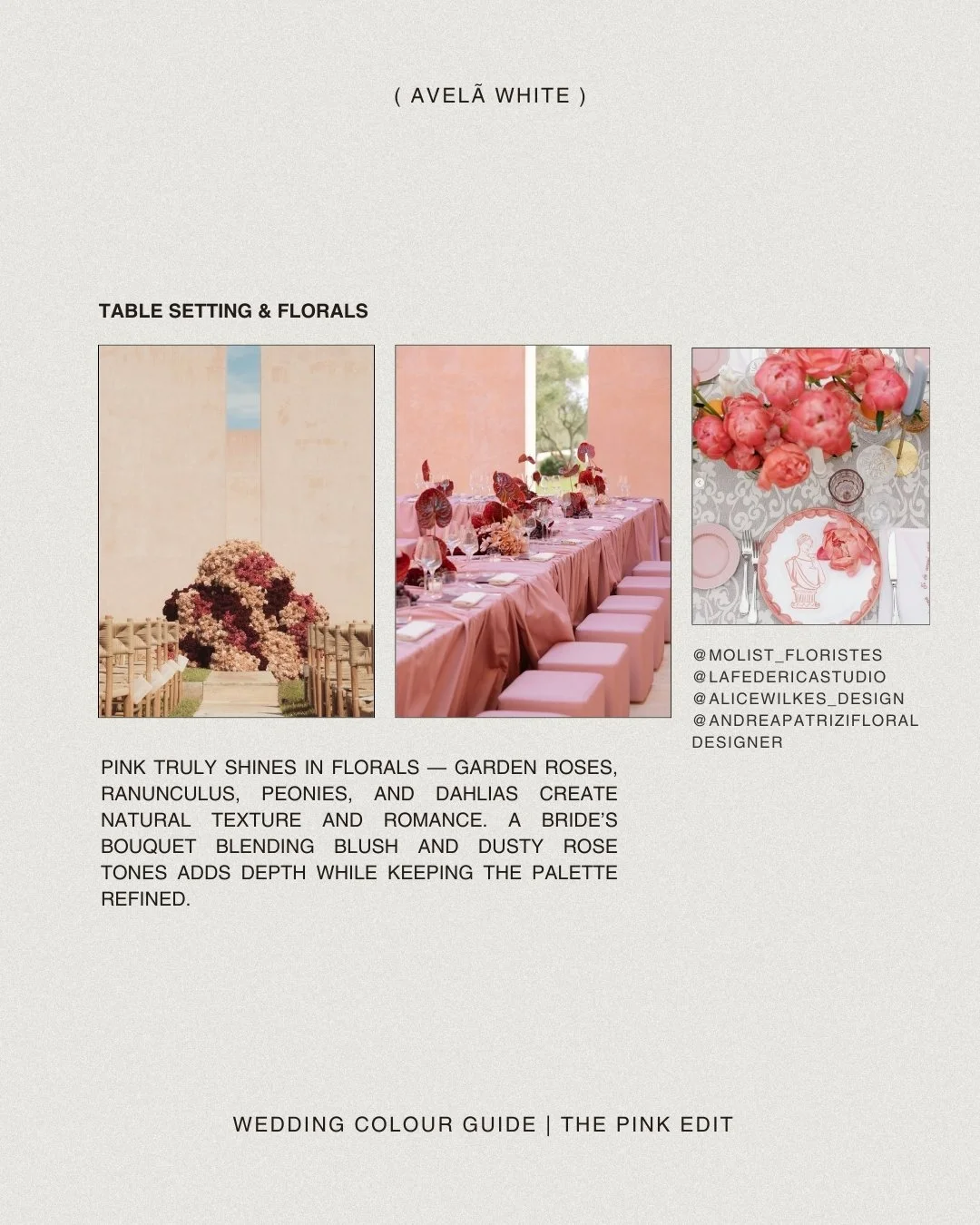
Table Setting & Florals
Pink truly shines in florals — garden roses, ranunculus, peonies, and dahlias create natural texture and romance. A bride’s bouquet blending blush and dusty rose tones adds depth while keeping the palette refined.
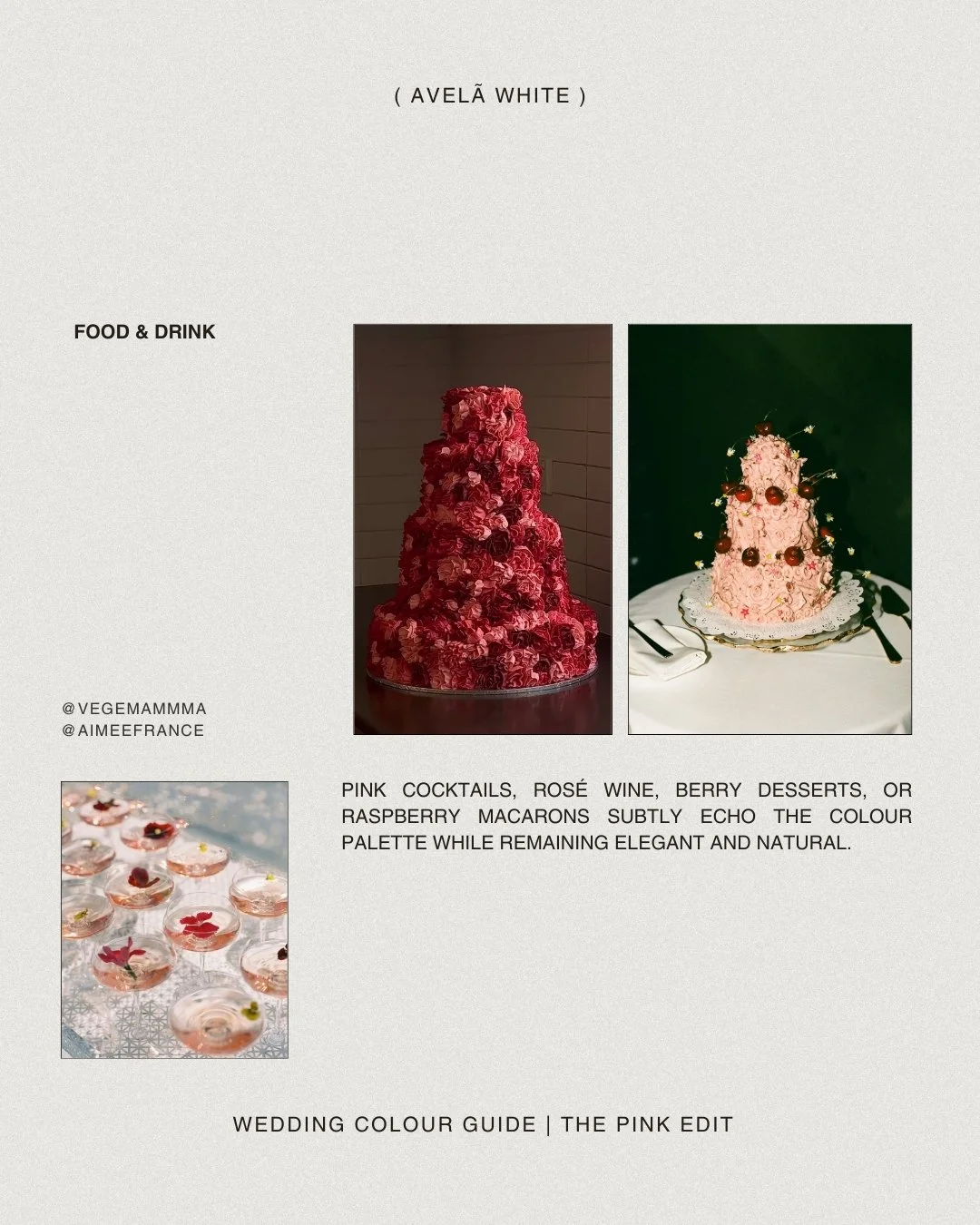
Food & Drinks
Pink cocktails, rosé wine, berry desserts, or raspberry macarons subtly echo the colour palette while remaining elegant and natural.
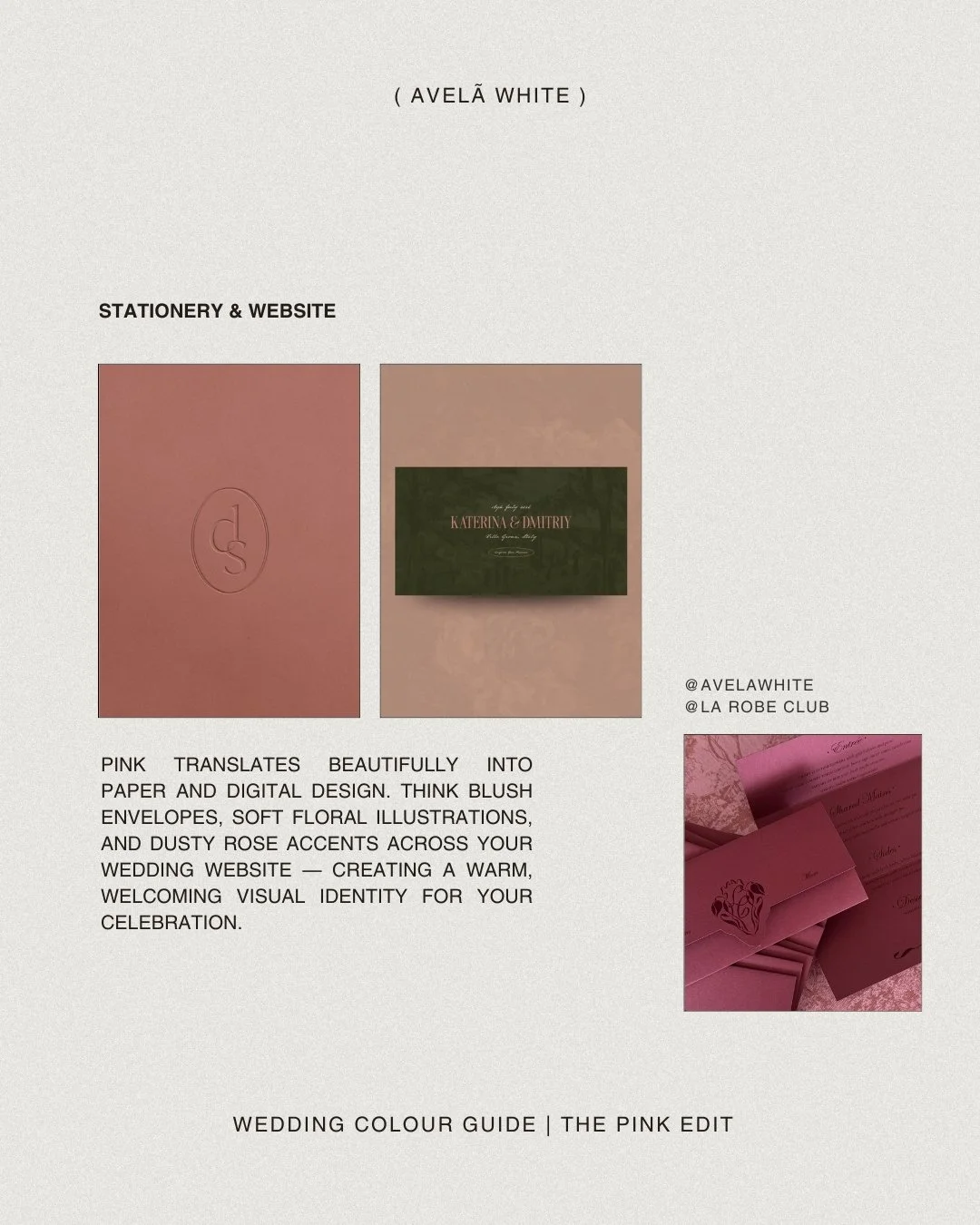
Stationery & Website
Pink translates beautifully into wedding stationery and digital design. Blush envelopes, delicate floral illustrations, and dusty rose accents create a warm and inviting aesthetic for invitations and wedding websites.
Pink remains one of the most beloved wedding colours because it balances softness with expression. Whether you choose delicate blush tones or deeper rose shades, pink creates a wedding palette that feels timeless, emotional, and elegant.
If you’re planning a pink wedding, the key is choosing shades that feel natural, layered, and refined.
read more