RSVP Etiquette for the Digital Age: A Complete Guide for Couples and Guests
Wedding RSVPs have changed significantly. Formal reply cards and stamped envelopes are increasingly being replaced by wedding websites, personalised RSVP forms and digital invitations. The method may be more modern, but the etiquette surrounding a wedding response remains just as important.
Digital RSVPs make it easier for couples to collect guest information, manage dietary requirements and communicate updates. They can also reduce printing, postage and administrative work. For guests, responding online often takes less than a minute.
Yet convenience can create uncertainty. Should a digital invitation be treated as formally as a printed one? Is it acceptable to reply by text? When should couples send a reminder? And what happens when a guest submits the wrong information?
This guide explains modern digital wedding RSVP etiquette for both couples and guests, from setting an appropriate deadline to handling plus-ones, meal selections and last-minute changes.
What Is a Digital Wedding RSVP?
A digital wedding RSVP allows guests to accept or decline an invitation online rather than returning a physical response card.
The RSVP may be collected through:
A bespoke wedding website
An online RSVP form
A digital wedding invitation
A personalised link sent by email
A QR code included on a printed invitation or details card
Many couples use a combination of print and digital elements. A formal invitation suite may direct guests to a wedding website, while fully digital celebrations may deliver the invitation and RSVP link together.
The format may have changed, but the meaning of RSVP has not. Derived from the French phrase répondez s’il vous plaît, it is a direct request for a response. Whether the invitation arrives on handmade paper or by email, guests should answer clearly and within the requested timeframe.
Is an Online RSVP Less Formal?
An online RSVP is not inherently less formal than a traditional reply card.
The level of formality is created by the design, wording and overall guest experience rather than the technology itself. A beautifully designed wedding website with personalised guest access can feel more considered than a generic printed insert.
For formal and luxury weddings, the digital experience should reflect the standard of the celebration. Typography, imagery, tone of voice, transitions and RSVP wording all contribute to how the invitation is perceived.
The etiquette remains the same: guests should respond promptly, couples should communicate clearly and all information should be handled respectfully.
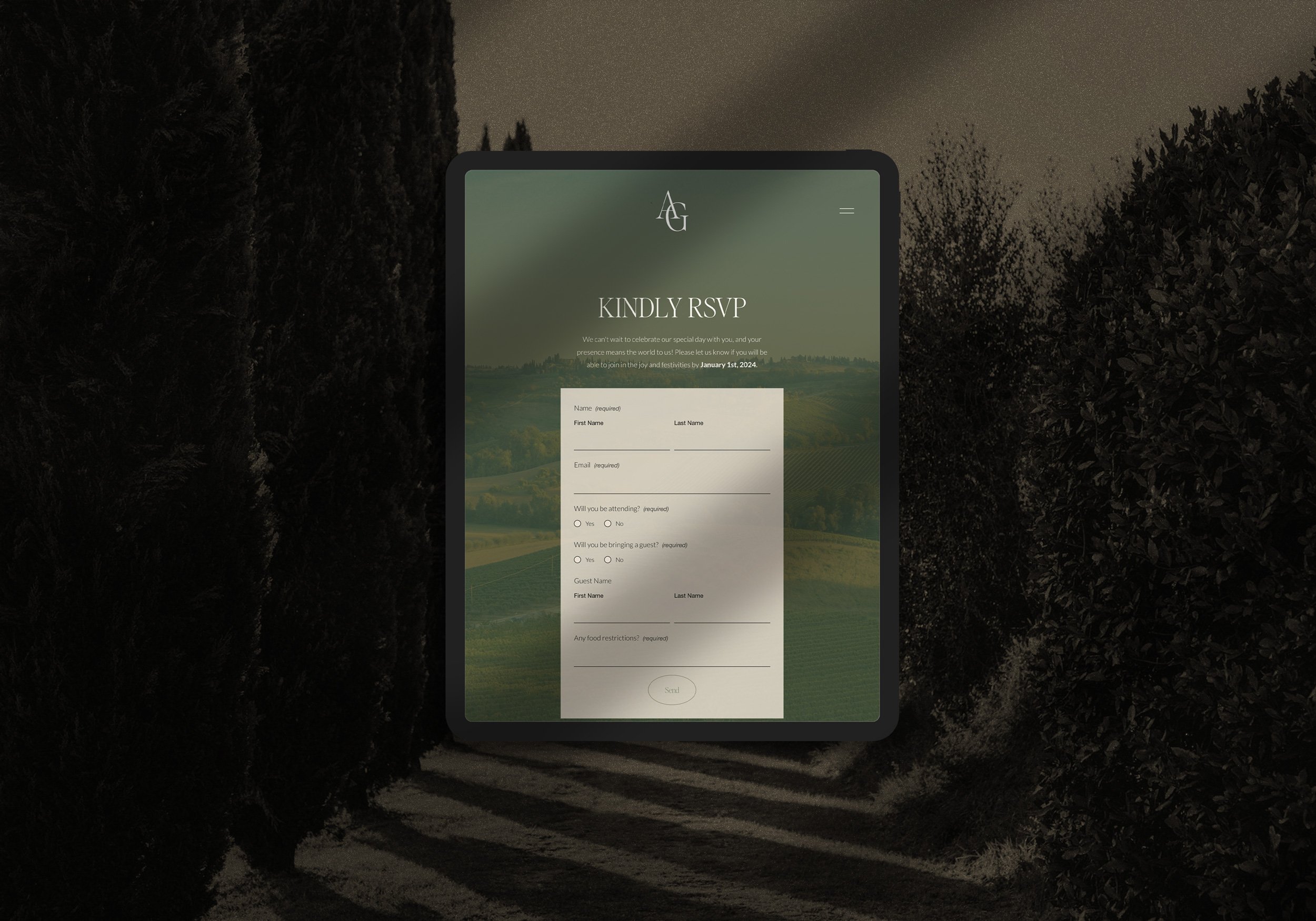
Digital RSVP Etiquette for Couples
1. Make the RSVP Process Easy to Find
Guests should never have to search through several pages to locate the RSVP form.
Include a visible RSVP button in the main navigation of your wedding website and repeat the link wherever invitations are delivered. For example, a printed details card may say:
Kindly respond by 15 May at ourweddingwebsite.com/rsvp
For digital invitations, use a clear call-to-action such as:
View Invitation & RSVP
Avoid hiding the form beneath vague labels such as “More Information” or “Guest Details.” The easier the process is to understand, the more likely guests are to complete it correctly.
2. Set a Clear RSVP Deadline
Every invitation should include a specific deadline. Phrases such as “Please respond soon” leave too much room for interpretation.
For many weddings, setting the RSVP deadline approximately four to six weeks before the celebration gives the couple enough time to confirm final numbers with the venue, caterer and stationery team.
Destination weddings may require an earlier response, particularly when guests need to arrange accommodation, flights or transfers. The correct timeline will depend on the venue, planner and supplier deadlines.
Write the date in full where possible:
Kindly RSVP by 15 May 2027
This is clearer for international guest lists, where numerical date formats may be interpreted differently.
3. Give Each Guest Clear Instructions
Your RSVP system should make it obvious who is invited.
If an invitation is addressed to a couple, family or household, the form should display the names of the invited guests. Where possible, avoid asking guests to type every name manually. Preloaded guest details reduce spelling mistakes and make plus-one arrangements easier to control.
Guests should be able to see:
The names included in their invitation
Whether a plus-one has been offered
Whether children are invited
Which wedding events they may attend
Any meal choices they need to make
Clarity prevents awkward conversations later.
4. Be Specific About Plus-Ones
One of the most common RSVP problems occurs when guests assume they can bring an additional person.
If a plus-one is included, state this clearly on the invitation or within the RSVP form. You may use wording such as:
We have reserved two seats in your honour.
For an unnamed guest:
Sofia Martins & Guest
If no plus-one has been offered, the form should only allow the invited guest to respond. Avoid including an open field that allows people to add extra names.
A well-designed RSVP system should enforce the guest list gracefully, without making the wording feel cold or confrontational.
5. Clarify Whether Children Are Invited
The same principle applies to children.
List every invited family member by name rather than using broad wording such as “The Williams Family” if only certain members are invited.
For an adults-only celebration, the wedding website can include a polite note:
While we adore your little ones, our wedding celebration will be an adults-only occasion. We hope this advance notice allows you to make the necessary arrangements.
The message should be warm, direct and consistent across the invitation, website and RSVP form.
6. Only Ask for Information You Actually Need
Online RSVP forms make it possible to collect a large amount of information, but that does not mean every question is necessary.
A typical wedding RSVP form may request:
Attendance
Guest names
Attendance at additional events
Meal selection
Dietary restrictions or allergies
Accommodation plans
Transport requirements
A song request or optional message
Keep essential questions separate from playful additions. A guest should not be prevented from submitting their RSVP because they cannot think of a song for the dance floor.
The form should feel simple, elegant and quick to complete.
7. Handle Dietary Requirements Carefully
Ask guests to share genuine dietary restrictions, allergies or religious requirements rather than general food preferences.
Suitable wording might be:
Please let us know about any allergies or dietary requirements our catering team should be aware of.
If meal selections are required, provide clear names and short descriptions. Avoid making guests search elsewhere on the website to understand what each option includes.
Couples should also explain that dietary information will be shared with the relevant caterer or venue team.
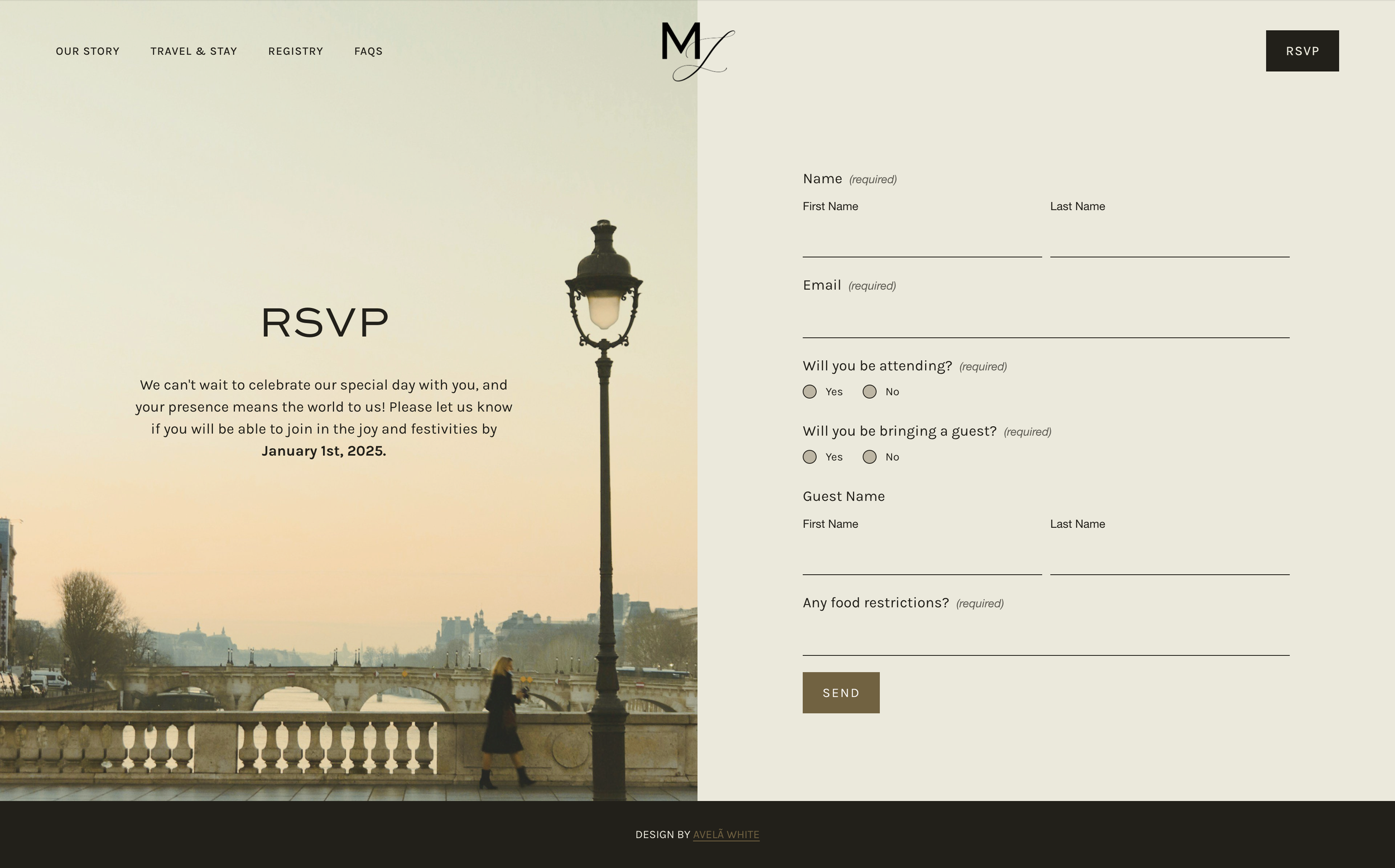
Semi-Custom Wedding Website Collection “Seine”. RSVP Page.
8. Include a Confirmation Message
After a guest submits their RSVP, they should immediately know that the response has been received.
A confirmation page might say:
Thank you. Your response has been received, and we cannot wait to celebrate with you.
For more complex weddings, consider sending an automated confirmation email summarising:
The names included in the response
Accepted or declined events
Meal choices
Transport selections
A link to update the response
This gives guests an opportunity to notice and correct mistakes before final numbers are confirmed.
9. Make It Possible to Correct a Response
Plans change. A guest may enter the wrong meal choice, forget to include an allergy or discover that they can no longer attend.
Ideally, your wedding website should allow guests to update their RSVP until the deadline. When this is not possible, provide a clear contact method.
For example:
To make a change to your response, please contact our planning team at [email address].
Once supplier deadlines have passed, guests should be advised that changes may not always be possible.
10. Offer an Alternative for Less Digital Guests
Not every guest will feel comfortable using an online form. Older relatives may prefer to respond by telephone, while some guests may experience accessibility or connectivity issues.
Include an alternative contact option for anyone who needs assistance:
Should you have any difficulty submitting your response, please contact [name] at [telephone number or email address].
A digital RSVP should make the guest experience more convenient, not less inclusive.
11. Protect Your Guests’ Privacy
Wedding RSVP forms often collect names, contact details, dietary information and travel plans. Couples should choose a trusted platform and avoid requesting sensitive information that is not necessary for organising the celebration.
Private wedding website features may include:
Password protection
Individual guest access
Hidden RSVP pages
Secure form submissions
Limited visibility in search engines
For high-profile or private events, a custom guest-management system can offer greater control than a public form link.
12. Send RSVP Reminders Politely
It is perfectly acceptable to remind guests who have not responded, but wait until the RSVP deadline has passed unless there is a genuine logistical reason to contact them sooner.
A personal message is usually more effective than a public reminder on social media.
Try:
We hope you are well. We are currently finalising the guest details for our wedding and noticed that we have not yet received your RSVP. When you have a moment, could you please respond through our wedding website by Friday? We would love to celebrate with you.
Keep the message warm and assume the invitation or reminder may simply have been overlooked.
13. Do Not Rely on Social Media as an RSVP System
A comment, reaction or enthusiastic message is not a confirmed RSVP.
Avoid asking guests to reply through Instagram, WhatsApp groups or social media polls unless your wedding is extremely informal. These channels make it difficult to track responses accurately and can lead to missed information.
Even when invitations are delivered digitally, responses should be collected in one central place.
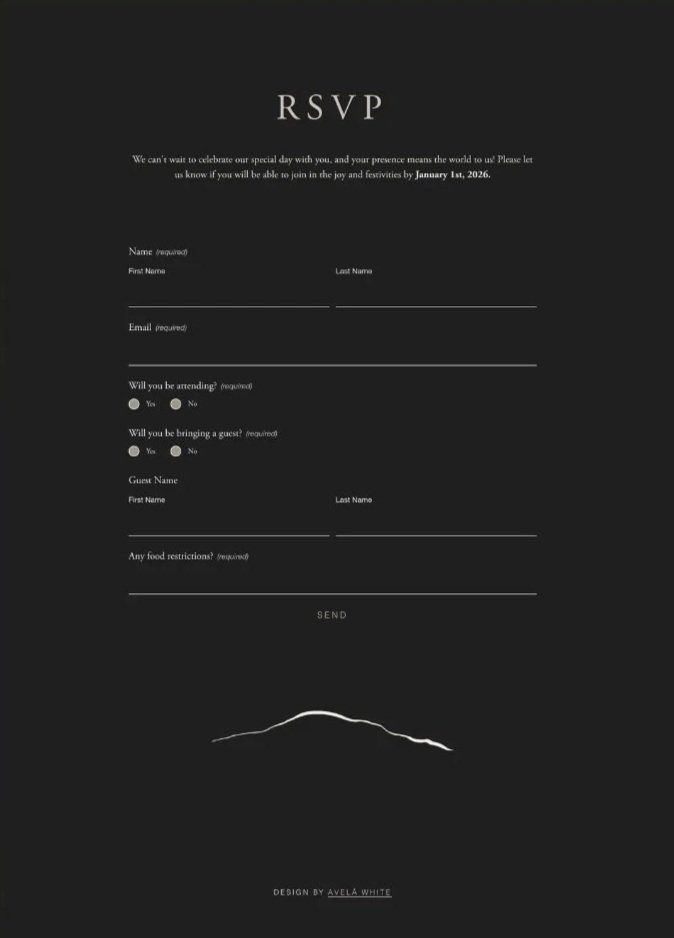
Semi-Custom Wedding Website Collection “Shiro”. RSVP Page.
Online Wedding RSVP Etiquette for Guests
1. Respond as Soon as You Know
Guests do not need to wait until the deadline to reply.
Once you know whether you can attend, submit your response. A prompt RSVP helps the couple plan seating, catering, transport, accommodation and stationery.
Do not accept provisionally unless the form specifically provides that option. The couple needs a clear yes or no.
2. Treat a Digital Invitation Seriously
An invitation sent by email or through a wedding website is still a formal invitation.
Read it carefully, check the date and respond through the requested method. Do not assume that liking the couple’s announcement, mentioning your attendance in conversation or sending an informal text counts as an RSVP.
3. Use the Official RSVP Link
Unless the couple has asked you to respond personally, use the RSVP system they provide.
Replying through a different channel creates extra administrative work and increases the risk that your response will not be recorded.
Even when you have already told the couple that you plan to attend, complete the official form.
4. Do Not Add an Uninvited Guest
Only include the people named on the invitation or displayed in the RSVP form.
If the invitation includes “and Guest,” you may add a companion. If it only includes your name, do not assume you have a plus-one.
Similarly, do not add children unless they are specifically invited.
When you are genuinely unsure, ask politely before submitting your response. Avoid pressuring the couple to expand their guest list.
5. Enter Names Correctly
Use the full names guests would like to see on place cards, seating plans or personalised stationery.
Check spellings carefully, especially when completing the RSVP for another person. Do not use nicknames unless that is how the guest is commonly known and would like to be addressed at the wedding.
6. Answer Every Required Question
Complete all relevant sections of the form, including attendance at welcome dinners, brunches or other wedding events.
For destination weddings, each event may have separate capacity, catering and transport requirements. Selecting “attending the wedding” does not necessarily confirm attendance at the full itinerary.
7. Only List Genuine Dietary Requirements
Use the dietary field for allergies, intolerances, religious requirements and established dietary choices such as vegetarian or vegan meals.
It is not generally the place to request a completely personalised menu based on minor preferences.
Be clear and specific. For example:
Severe peanut allergy
is more useful than:
No nuts
The catering team may need to understand the severity of an allergy and whether cross-contamination must be avoided.
8. Do Not Leave the Couple to Chase You
Missing the RSVP deadline may seem minor, but it can affect venue numbers, catering orders, table plans, transport bookings and printed materials.
If the deadline has passed, respond immediately and apologise briefly. Do not wait for the couple to contact you.
9. Update the Couple If Your Plans Change
Once you have accepted, the couple will reasonably expect you to attend.
If an emergency or significant change means you can no longer come, tell the couple or planner as soon as possible. Do not simply edit your response at the last minute without explanation, particularly after the RSVP deadline.
Similarly, if you initially declined and later become available, do not assume the invitation remains open. Contact the couple and ask whether arrangements can still be made.
10. Never Substitute Another Guest Without Permission
A wedding invitation is not transferable.
If your invited partner cannot attend, you should not bring a friend, relative or new companion in their place unless the couple explicitly approves the change.
Seating plans and guest lists are carefully considered, and the couple may know every person attending.
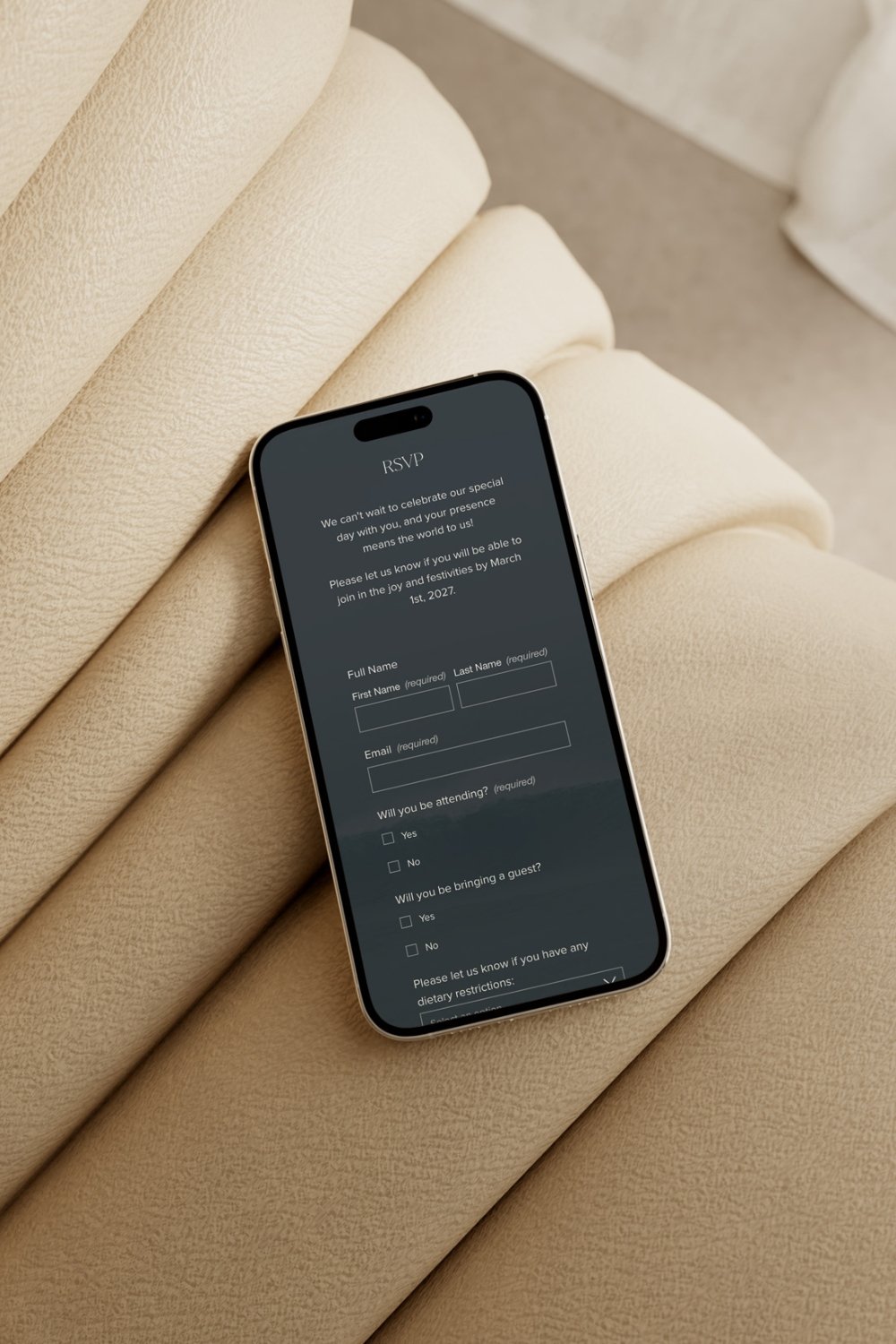
Semi-Custom Wedding Website Collection “Onda”. RSVP Page.
Digital RSVP Wording Examples for Wedding Websites
Formal RSVP Wording
The favour of your response is kindly requested by 15 May 2027.
Please enter your name below to view the events included in your invitation.
Modern RSVP Wording
Will you be joining us?
We would be delighted to celebrate with you. Kindly respond by 15 May 2027.
Destination Wedding RSVP Wording
Join us in Portugal
Please let us know which wedding events you will attend by 15 May 2027. Travel, accommodation and transportation details can be found throughout our wedding website.
Adults-Only Wedding Wording
We kindly ask that only the guests named on the invitation attend. Our wedding celebration will be an adults-only occasion.
Limited Plus-One Wording
As our celebration is intimate, we are only able to accommodate the guests formally named on each invitation. Thank you for understanding.
Dietary Requirements Wording
Please share any allergies or dietary requirements our catering team should be aware of.
RSVP Confirmation Wording
Your response has been received. Thank you—we cannot wait to celebrate together.
Common Digital RSVP Mistakes to Avoid
Even a beautiful wedding website can create confusion when the RSVP experience has not been planned carefully.
Common mistakes include:
Forgetting to include an RSVP deadline
Using an ambiguous numerical date
Allowing guests to add uninvited names
Asking too many unnecessary questions
Failing to confirm that a response was submitted
Making the RSVP page difficult to use on mobile
Collecting responses across multiple platforms
Sending reminders before guests have had enough time to reply
Forgetting to offer help for guests who struggle with the technology
Closing the form without explaining how changes should be requested
Test the full process before sending your invitations. Complete the RSVP on both a phone and desktop computer, check every guest variation and make sure confirmation emails are delivered correctly.
Why the Wedding Website Matters
The RSVP form should not feel like an isolated administrative tool. It is part of the wider wedding experience.
Guests may return to the wedding website repeatedly over several months to check the schedule, venue details, dress code, travel advice and accommodation recommendations. The website becomes a central point of communication before the celebration begins.
A considered digital experience can:
Present the wedding details clearly
Reduce repeated questions
Keep information consistent
Collect accurate guest data
Support international and destination wedding guests
Reflect the visual identity of the celebration
Create anticipation before the wedding day
For this reason, the RSVP journey deserves the same attention as the invitation suite itself.
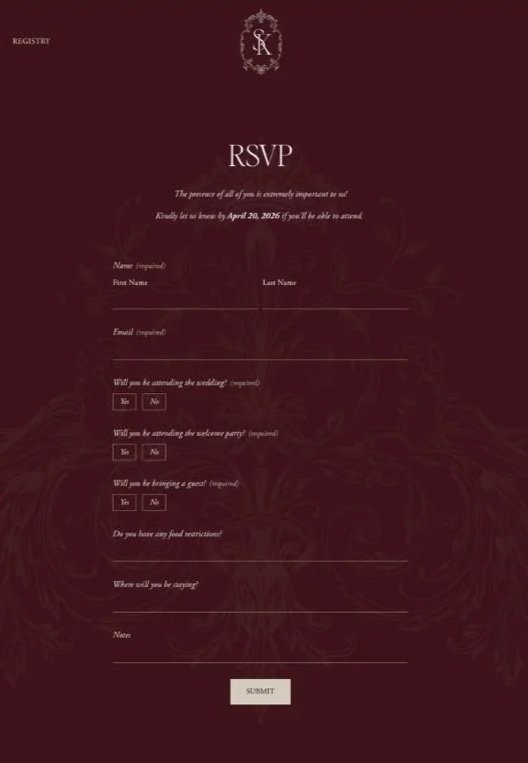
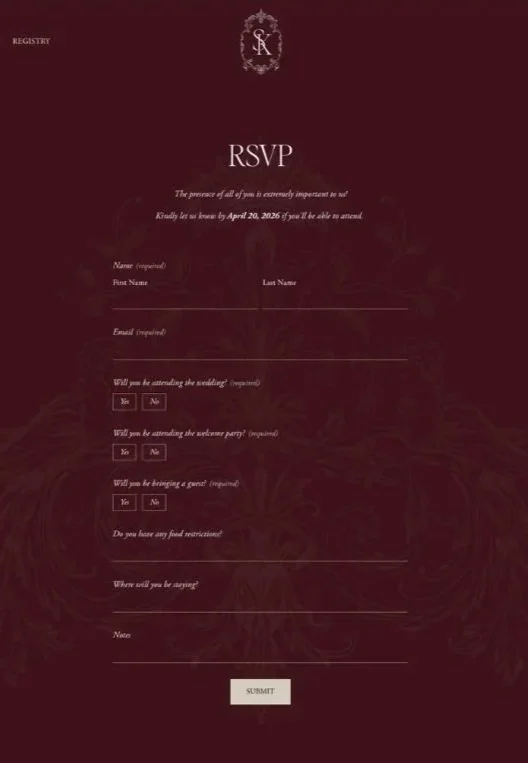
Custom Website design. RSVP Page.
Frequently Asked Questions About Digital Wedding RSVPs
How far in advance should the RSVP deadline be?
For many weddings, an RSVP deadline four to six weeks before the celebration is practical. Destination weddings or multi-day events may require an earlier deadline. Confirm final dates with your venue, caterer, planner and stationery designer before printing or publishing the invitation.
Is it acceptable to RSVP to a wedding by text?
Only when the couple has specifically asked guests to respond by text. Otherwise, use the wedding website, form or response method included in the invitation.
Should couples send an RSVP reminder?
Yes. A polite reminder can be sent to guests who have not responded once the deadline has passed. Contact them privately rather than posting a general reminder publicly.
Can guests change an online wedding RSVP?
This depends on the RSVP platform. Some wedding websites allow guests to edit their response before the deadline. Otherwise, the guest should contact the couple or planner directly.
Can digital RSVPs be used for formal weddings?
Yes. Digital RSVPs can be appropriate for formal, luxury and destination weddings when the website, invitation design and wording reflect the tone of the celebration.
Should a wedding website ask for guests’ email addresses?
An email address can be useful for sending confirmations and important updates, but couples should only collect information they genuinely need. Explain how the details will be used and avoid sharing them beyond the relevant wedding suppliers.
What should a guest do after missing the RSVP deadline?
Respond immediately through the requested method and contact the couple or planner with a brief apology. Be understanding if catering, seating or attendance arrangements can no longer be changed.
Does an online RSVP replace a wedding invitation?
It can. Some couples send fully digital wedding invitations, while others use printed invitations that direct guests to a website. The right approach depends on the wedding style, guest list and overall design experience.
A More Considered Way to RSVP
Digital tools have made wedding planning faster, but good etiquette is still based on thoughtfulness.
Couples should make the process clear, inclusive and easy to complete. Guests should respond promptly, respect the names on the invitation and communicate changes as soon as they arise.
When thoughtfully designed, a digital RSVP does more than collect attendance. It becomes part of a cohesive wedding experience—one that begins long before guests arrive at the venue.
Where to Start
read more