Most DIY platforms default to a single scrollable page. For a small local celebration it works. For anything more — a destination wedding, an international guest list, a celebration where the details matter — a one-page website is quietly working against you.
Your wedding website is not an afterthought. It is the first designed thing your guests will encounter — before the invitation arrives, before they see the venue, before the day itself. It sets the tone. It tells people, quietly and immediately, what kind of wedding this is going to be.
Which makes the question of how it is structured more important than most couples realise.
What a one-page wedding website actually gives you
A one-page format does one thing well: it delivers the essentials in a single, uninterrupted scroll. Date, venue, dress code, RSVP link. If your wedding is local, your guest list is tight, and the only question anyone is likely to ask is what time does it start, then one page is probably sufficient.
The limitations emerge the moment you have more to say. One-page layouts are built around brevity. The moment you add a detailed schedule, accommodation options, a getting-here section with driving and taxi alternatives, a dietary preference form, and a frequently asked questions section, a single page becomes a scroll that goes on long enough to feel exhausting. Guests skim, miss things, and message you anyway.
Why we recommend at least five pages — even for a local wedding
At Avelã White, the starting point for every wedding website we design is a five-page structure. Not because five is a magic number, but because it maps naturally to how guests actually look for information — and because it lets each section breathe.

Welcome
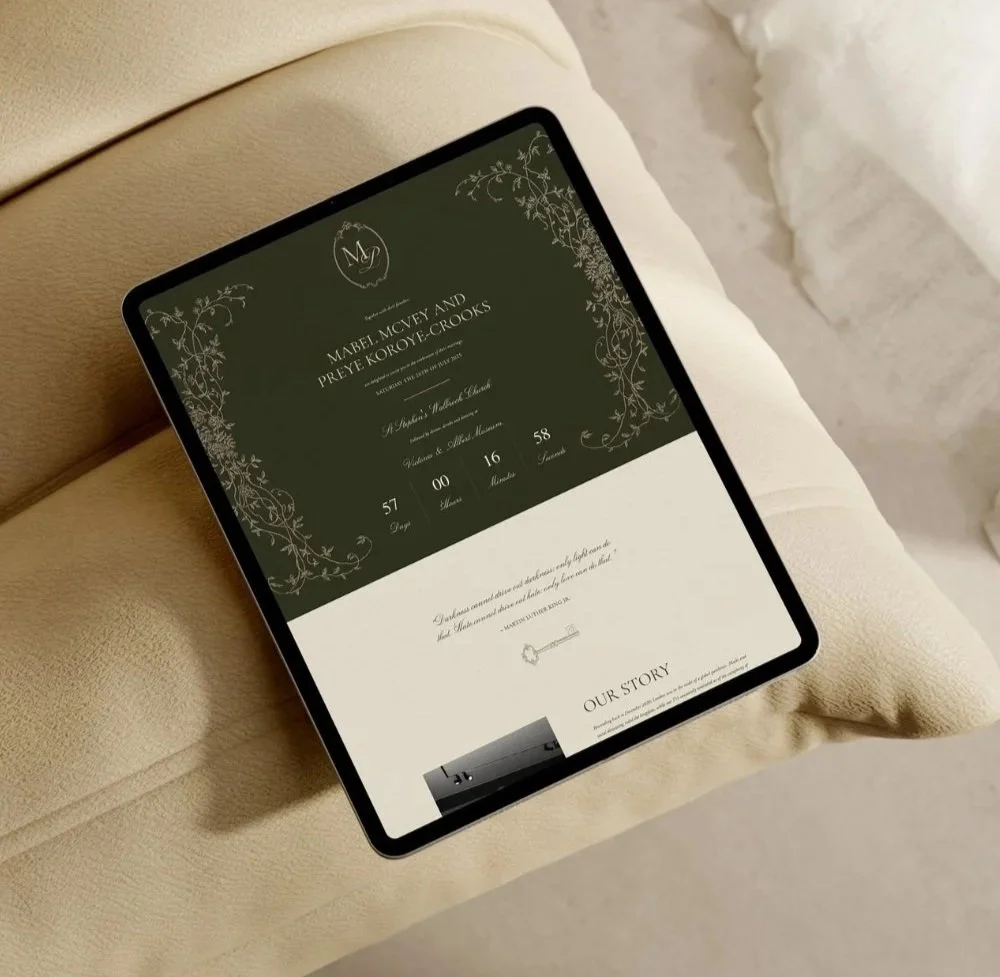
Your names, your date, your venue. The first impression. This page sets the visual tone for everything that follows — a well-designed welcome page tells guests, before they have read a single word, that this wedding is going to be beautiful.

Our Story
If your guest list mixes different social circles, a brief love story creates warmth and context. It also gives you somewhere to be personal in a way a one-page format rarely has room for.

Schedule
A dedicated page for the order of the day. Ceremony time, drinks reception, dinner, and any important notes. This can be presented as a simple timeline or a more detailed minute-by-minute sequence.

Travel & Accommodation
Getting-here information deserves its own space. Driving directions, the nearest station, parking, recommended taxis, and a curated selection of local hotels at different price points. This page alone saves you dozens of individual messages.

RSVP
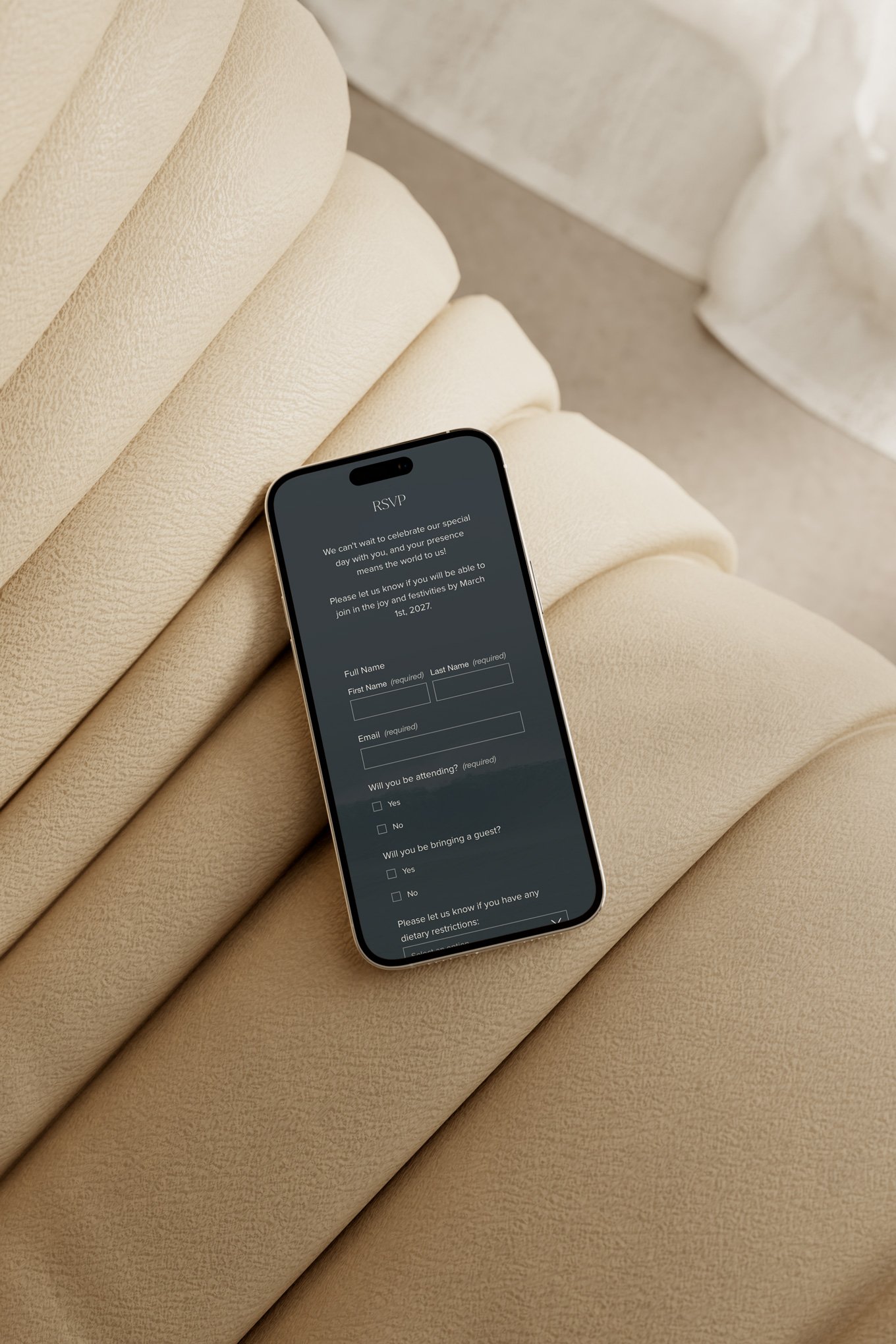
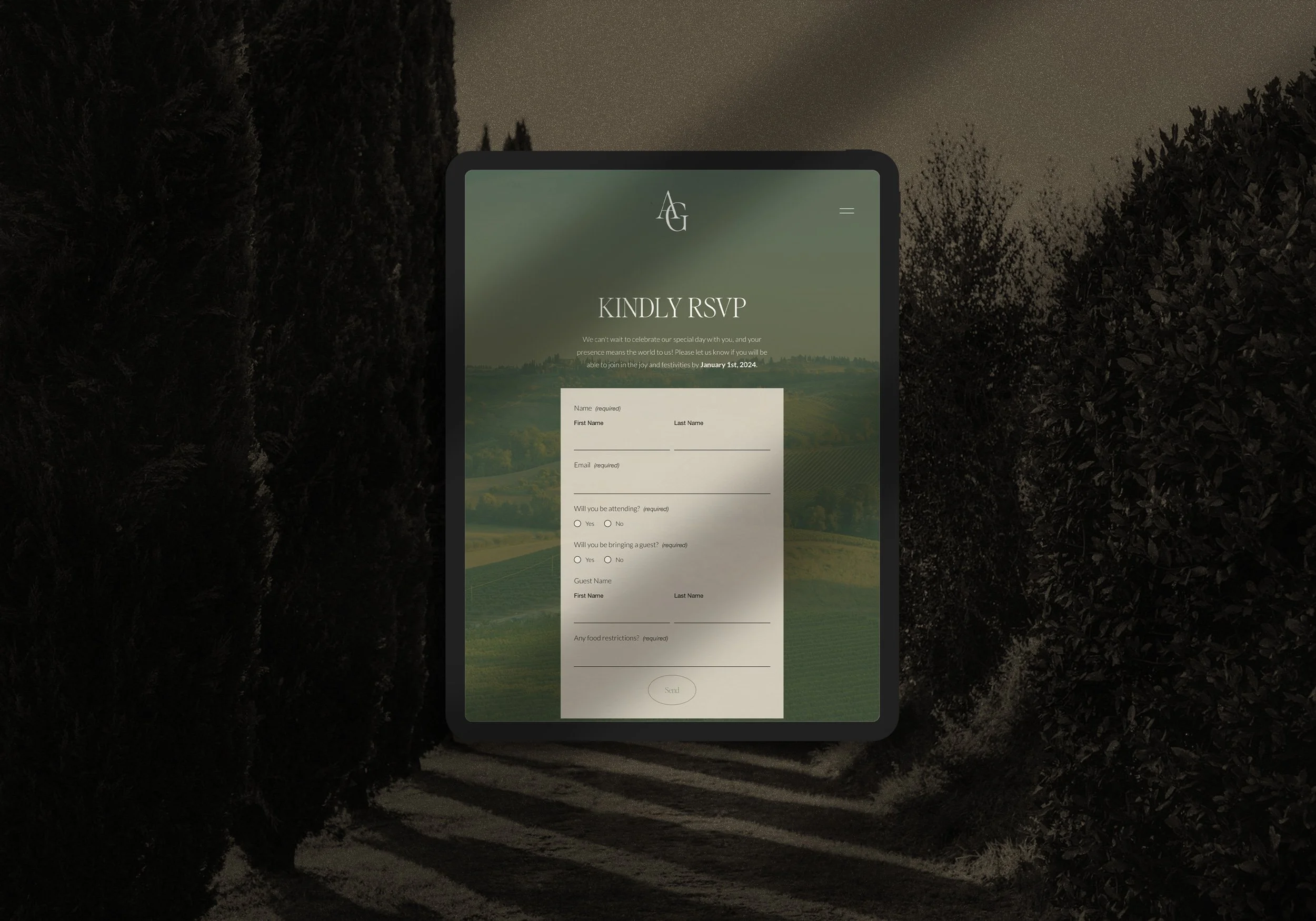
A standalone RSVP page allows for a proper form: meal choices, dietary requirements, song requests, plus-one confirmations. Burying this at the bottom of a single page almost always results in incomplete responses.
For destination weddings: build until it is genuinely useful
If your wedding is abroad — or involves guests travelling from multiple countries — a five-page structure is the minimum, not the ideal. The following additions are what we recommend for destination celebrations and multi-day events.

Individual Event Pages
When your celebration spans more than one day or venue, each event deserves its own dedicated page. Welcome dinner on Thursday. Ceremony and reception on Saturday. Farewell brunch on Sunday morning. Each page carries its own venue details, dress code, timings, and map.
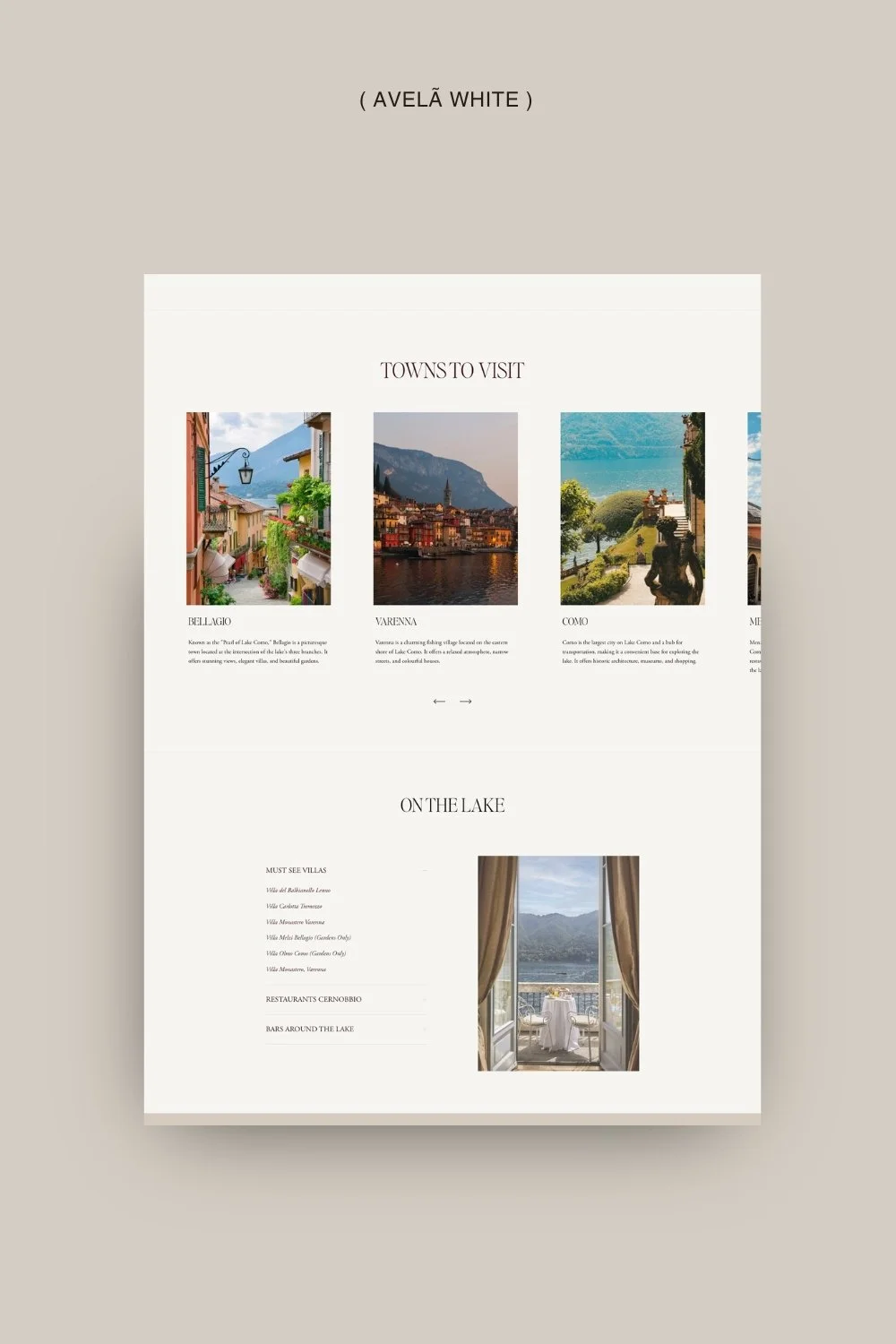
Local Guide
Restaurants, things to do, where to swim, the best coffee the morning of the wedding. A thoughtful local guide is one of the most appreciated things a couple can include — and it says something about who you are.
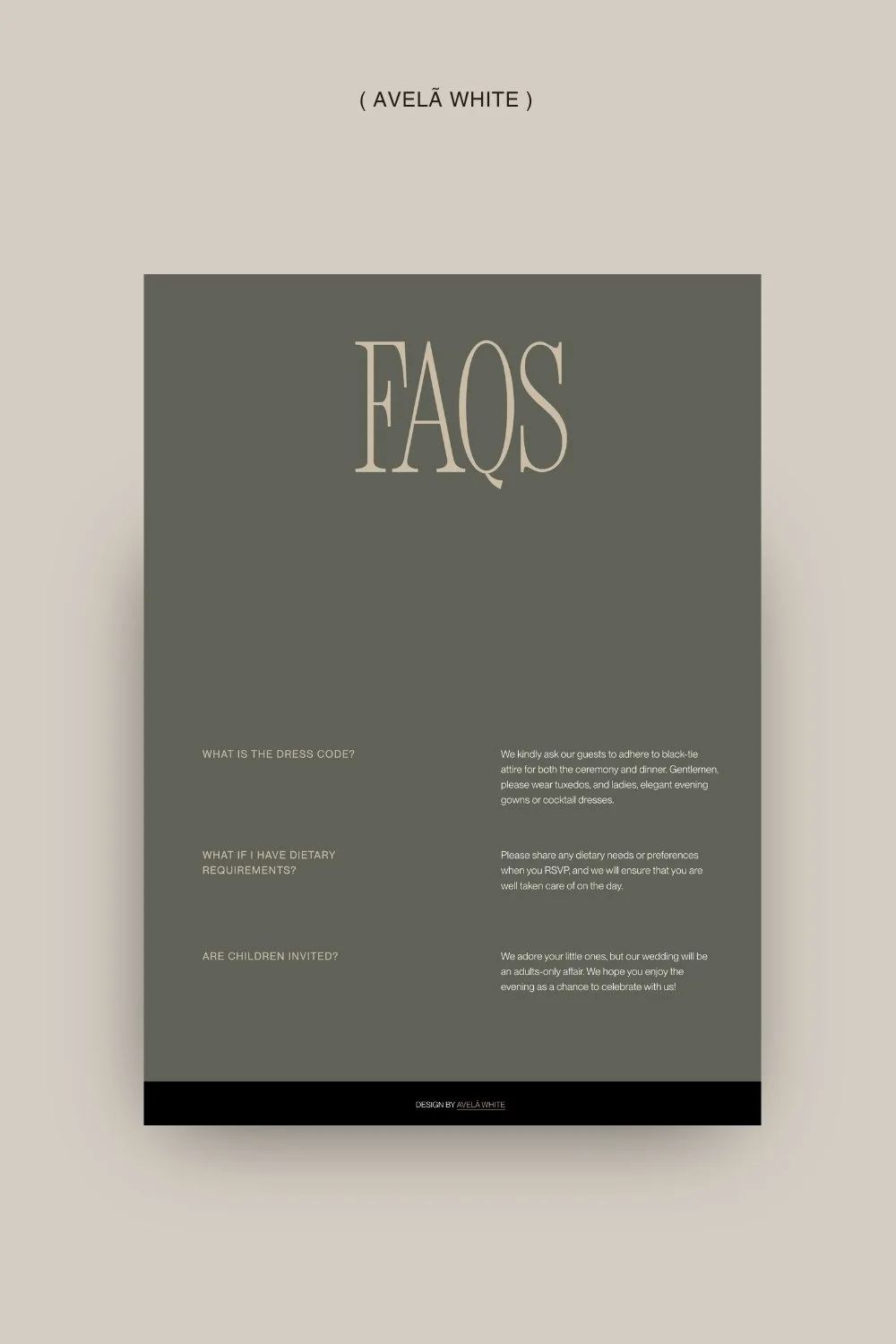
FAQs
A dedicated FAQ page handles the questions you know are coming. What should I pack? Is there a shuttle from the hotel? When should I book flights? Answering these once, clearly, saves everyone a great deal of time.

Vendor List
Your photographer, florist, hair and makeup artist, musicians, planner. Publishing your vendor list before the wedding is a warm acknowledgement of the team behind the day, and makes it easy for guests to tag the right people on social media.
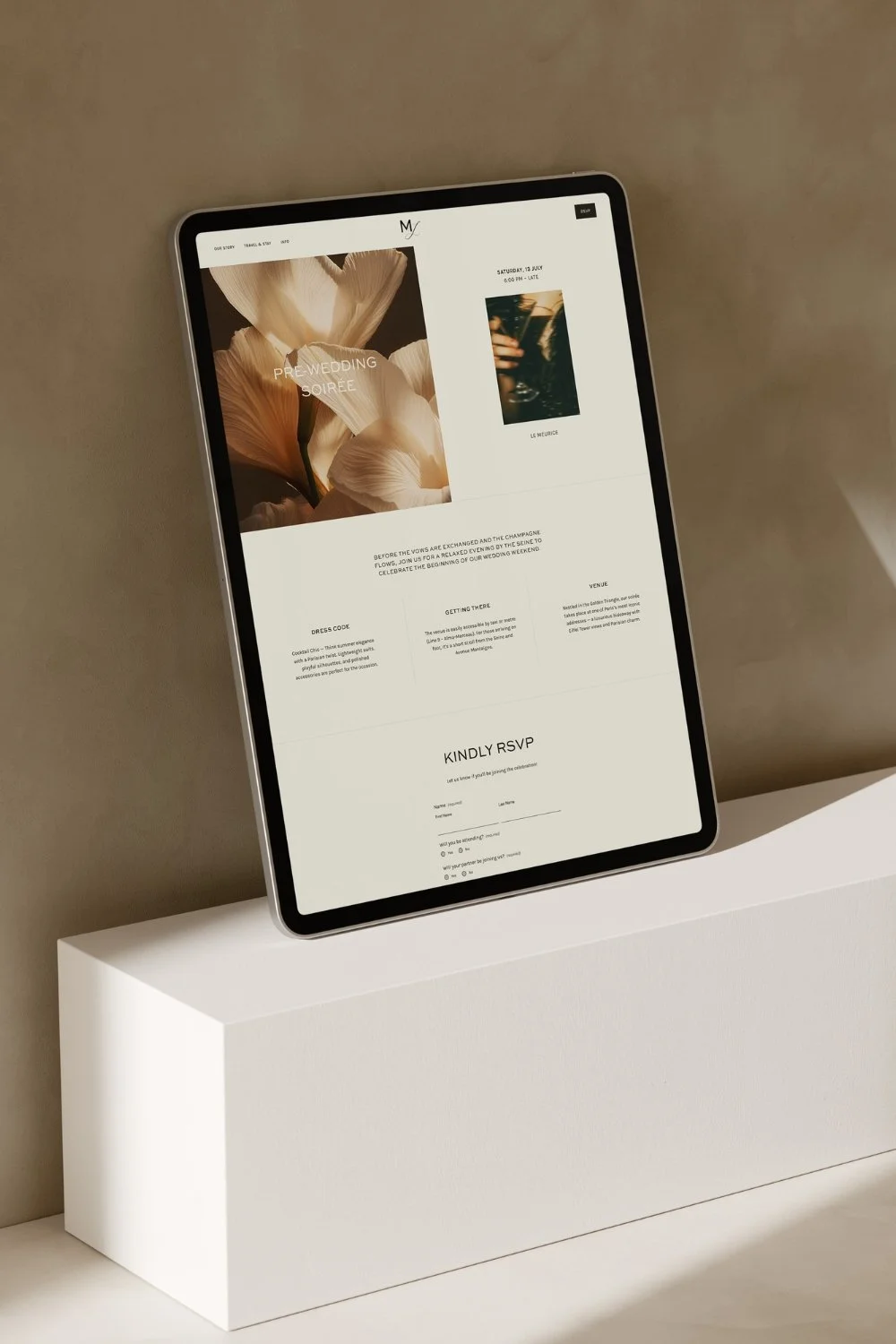
Day-Of Reminder Page
A temporary, mobile-optimised page added to the navigation in the days before the wedding. Transfer times, the day's schedule in brief, what to bring, the emergency contact. It lives for a few days and then quietly retires — and guests are grateful for it in a way that is disproportionate to how little effort it takes to create.
The experience of navigating a multi-page website
There is a reason that every website you admire — from a boutique hotel to a luxury brand — uses navigation rather than a single scroll: it is simply easier to find what you are looking for.
A guest who arrives at your wedding website at eleven o'clock on a Tuesday because they cannot remember the dress code does not want to scroll through your love story and the full schedule to find it. They want to click "Details" and be there in a second. Navigation menus, properly designed, make a website feel intuitive rather than effortful — and finished rather than assembled.
What this means for your design
A multi-page wedding website requires more considered design than a single-page template. The visual identity — fonts, colour palette, spacing, imagery — needs to hold together across every page. The navigation needs to be clear and consistent. The hierarchy of information needs to be thought through from the start.
This is where a bespoke or semi-custom design makes a difference that a template platform cannot replicate — not because the technology is out of reach, but because the thinking is. If you are planning a destination wedding, an international celebration, or simply a wedding where the details matter and the guest experience should feel as considered as everything else, a one-page website is not enough. You deserve something that works as hard as you do.
Thinking about your wedding website and not sure where to begin?
Whether you are drawn to a bespoke build or one of our semi-custom collections, we design wedding websites that are as considered as the celebrations they represent.
read more