Nobody teaches you how to ask one or two hundred people to confirm whether they are free on a particular Saturday.
And yet, somewhere between sending the invitations and giving the final headcount to your caterer, that is exactly what you are doing — repeatedly, diplomatically, and usually while also planning everything else.
Digital RSVPs have made the mechanics easier. Guests can respond from their phone in under a minute, without finding a pen, envelope or stamp. For a destination wedding, the same form can tell you who is coming to the welcome dinner, who needs transport and whether three different people at table seven are vegetarian.
What technology has not completely solved is the etiquette underneath it.
When should the RSVP deadline be? How much information should you ask for? What do you do when someone adds a plus-one you did not invite? And, inevitably, when are you allowed to start chasing the people who have not replied?
Modern wedding RSVP etiquette is less about rigid rules and more about clarity. Your guests should know exactly what you need from them, and you should not have to reconstruct your final guest list from an RSVP form, six WhatsApp messages and something your mother was apparently told over lunch.
Here is how to make the whole thing considerably easier.
Set Your RSVP Deadline Earlier Than You Think
A good general rule is to set your wedding RSVP deadline around four to six weeks before the celebration rather than leaving it until the last possible moment.
Your venue, caterer, planner and stationery designer will all be working from your final guest numbers. Those numbers affect table plans, place cards, menus, transport, accommodation and quite a lot of other things that become surprisingly difficult to change at the last minute.
And guests rarely all respond at once.
An earlier deadline gives you time to follow up with the people who have forgotten without every message feeling urgent. It also leaves room to resolve meal selections, plus-one questions and inevitable changes before your suppliers need their final numbers.
Destination weddings and multi-day celebrations may need an even earlier RSVP deadline, especially when guests are arranging international travel or choosing between several events.
Work backwards from the date your venue or caterer needs final numbers and give yourself a comfortable buffer before it.
Most importantly, use an actual date.
Kindly RSVP by 15 May 2027 is far more effective than Please respond soon.
For international guest lists, spelling out the month also avoids the small but very real problem of American and European date formats meaning completely different things.
Make the RSVP Impossible to Miss
A digital RSVP is only convenient if guests can actually find it.
If you have a wedding website, include a clear RSVP link in the main navigation rather than hiding it somewhere inside the details page. Printed invitations can direct guests to the website or include a QR code, while digital invitations should have an obvious call to action.
View Invitation & RSVP
or simply:
Kindly Respond
The form also needs to work properly on mobile.
Most guests will first open your invitation on their phone — perhaps while commuting, between meetings or standing in a supermarket queue. If the RSVP form is awkward to navigate, requires endless scrolling or refuses to load properly, they will decide to finish it later.
Later has a habit of becoming three weeks after the deadline.
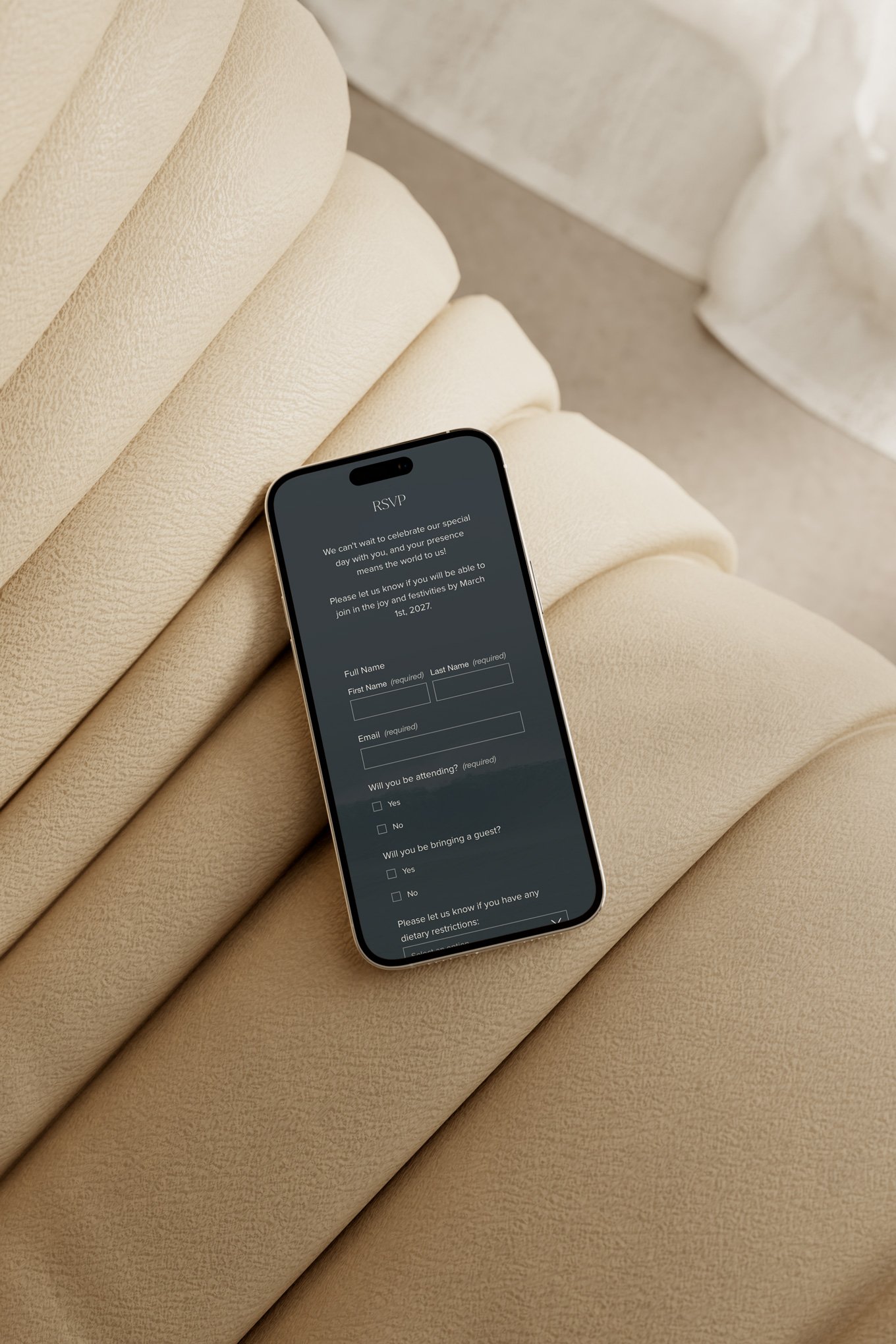
Semi-Custom Wedding Website Collection “Giona”. RSVP Page.
Ask for Everything You Need — But Not Everything You Can Think Of
One of the advantages of an online wedding RSVP is that it can collect much more than a simple yes or no.
Depending on your wedding, you might need:
Attendance for individual events
Meal selections
Allergies and dietary requirements
Transport requirements
Accommodation information
The name of an invited plus-one
Contact details
And then there are the fun extras: song requests, marriage advice, favourite cocktails and messages to the couple.
These can be lovely, but they should remain optional.
The best wedding RSVP forms feel short even when they are doing quite a lot behind the scenes. Collect the practical information you genuinely need in one place rather than sending guests several follow-up emails, but resist turning the form into a survey.
Every additional question is another little opportunity for someone to think, “I’ll finish this later.”
Be Very Clear About Who Is Invited
This is where a good digital RSVP system can save you a surprisingly awkward conversation.
Traditionally, the names written on the invitation indicate exactly who is invited. In reality, not every guest studies invitation etiquette before filling in an RSVP.
If your form simply says Guest Name, someone will eventually use the box to add a person who was not actually invited.
Clear design works better than stricter wording.
Whenever possible, pre-populate the RSVP with the names of invited guests. If someone has a plus-one, show it. If they do not, do not give them an empty field where another name can conveniently appear.
For example:
We have reserved two seats in your honour.
For someone with an unnamed plus-one:
Sofia Martins & Guest
And for an intimate celebration:
As our wedding will be an intimate occasion, we are only able to accommodate the guests named on each invitation. Thank you for understanding.
A personalised wedding website makes this particularly easy because different guests can see different RSVP options. One household may be invited to three wedding events while another is invited to two. One guest may have a plus-one while another does not.
The website can hold that logic quietly, without turning your invitation into an explanation of your guest-list policy.
Make the Children Question Just as Clear
The same applies to children.
If children are invited, include their names.
If they are not, make that clear across the invitation, website and RSVP rather than expecting parents to infer it.
For an adults-only wedding:
While we adore your little ones, our wedding celebration will be an adults-only occasion. We hope this advance notice allows you to make the necessary arrangements.
Warm wording is useful. Ambiguous wording is not.
The goal is to avoid parents reaching the final stages of booking flights and accommodation before realising that their children are not included.
For destination weddings especially, give families as much notice as possible.
Ask About Dietary Requirements Properly
Digital RSVPs make collecting dietary information much easier — provided the question is clear.
Something as simple as:
Please let us know about any allergies or dietary requirements our catering team should be aware of.
is usually enough.
Guests should be able to tell you about allergies, intolerances, religious requirements and established dietary choices such as vegetarian or vegan meals.
If your caterer needs more detail, encourage specificity. Severe peanut allergy tells the catering team much more than no nuts.
If guests are selecting their meal in advance, include enough description in the RSVP form for them to make the choice without having to navigate back and forth between several pages.
The easier you make it to answer properly, the fewer clarifying emails you will be sending later.
Let People Say No
This sounds obvious, but some wedding RSVP forms are written with so much excitement about attending that declining starts to feel like admitting to a crime.
Guests should be able to say no easily and gracefully.
You might use:
Joyfully accepts
and:
Regretfully declines
Then, if they decline, take them to a simple confirmation rather than forcing them through questions about food, transport and what song they would like to hear on the dance floor they will not be standing on.
A short message can close the interaction warmly:
Thank you for letting us know. We are sorry you will not be able to join us, but we truly appreciate your response.
A decline is useful information. Make it easy for guests to give you one.
Confirm That Their RSVP Actually Worked
After a guest presses submit, something should happen.
Ideally, a confirmation page tells them immediately that their response has been received:
Thank you. Your RSVP has been received, and we cannot wait to celebrate with you.
For more complex destination weddings, it can also be useful to send a confirmation email summarising their selections: which events they are attending, their meal choice and any transport they requested.
This does two things.
It reassures guests that the form worked, and it gives them a chance to notice that they accidentally chose beef when they are vegetarian.
Without confirmation, you will inevitably receive messages asking, “Did our RSVP go through?” — which rather defeats the purpose of the digital system.
Give Guests a Way to Change Their Answer
Wedding invitations are often sent months in advance. Things change.
Someone chooses the wrong meal. A travel plan changes. A guest develops a dietary requirement. Someone who accepted can no longer come.
Ideally, guests should be able to amend their digital RSVP before your deadline.
If your system does not allow this, tell them clearly who to contact:
To make a change to your RSVP, please contact our planning team at [email address].
After final numbers have been sent to your suppliers, changes may not always be possible. That is fine — what matters is giving guests an obvious route for communicating them rather than leaving them to send a message somewhere and hope it reaches the right person.
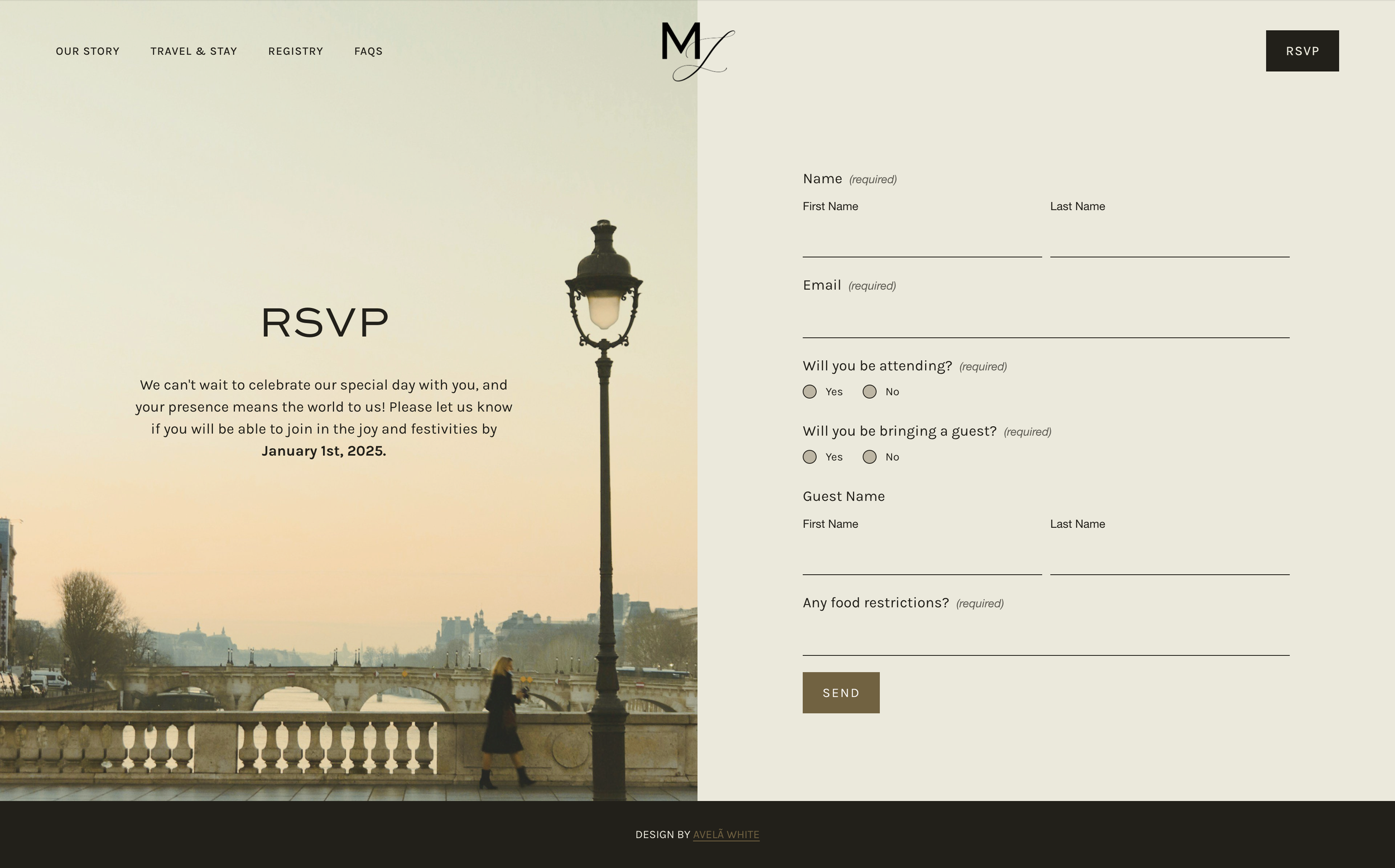
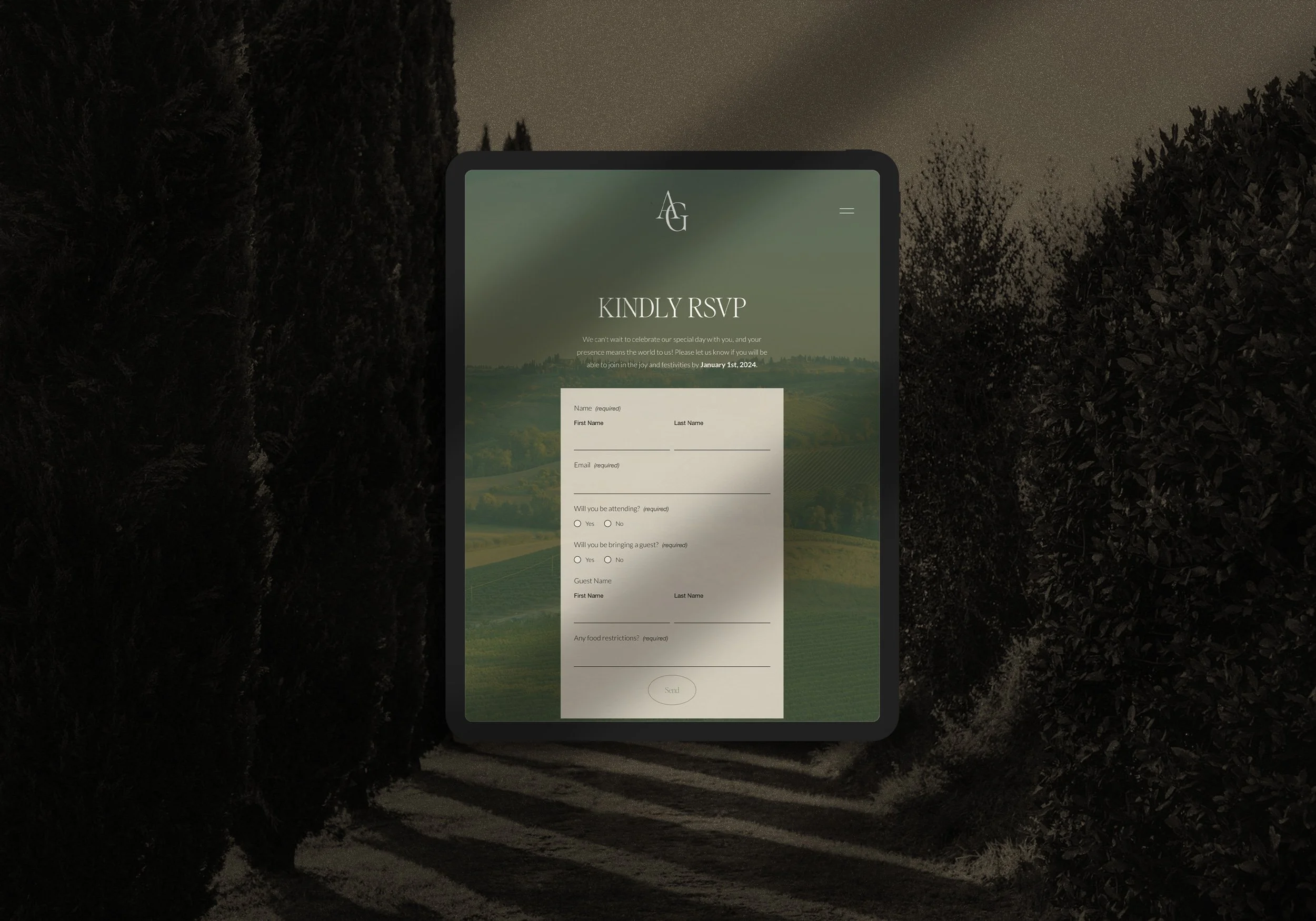
Semi-Custom Wedding Website Collection “Seine”. RSVP Page.
Remember That Not Everyone Wants to RSVP Online
For most guests, responding online will be considerably easier than finding a stamp.
For a few, it will not.
Older relatives may prefer a telephone call. Someone may have accessibility needs or difficulty navigating the platform. An international guest may have poor connectivity.
You do not need to create a second elaborate RSVP system, but it is thoughtful to provide an alternative:
Should you have any difficulty submitting your RSVP, please contact [name] at [telephone number or email address].
A family member or planner can always enter the response into the main system for them afterwards.
Digital should mean convenient, not compulsory technical competence.
Keep All the Responses in One Place
This may be the most important rule of the entire process.
If half of your guests RSVP through the website, several message you directly, two email the planner, six tell your parents and someone mentions at dinner that they are “definitely coming,” you do not really have an RSVP system.
You have several competing versions of your guest list.
Choose one official place for responses and direct guests back to it wherever possible.
Even if someone tells you personally that they are attending, you can say:
Perfect — could you pop that into the website when you get a moment? We’re keeping all our final details there.
It is not overly formal. It is how you avoid trying to remember three months later whether their partner was also coming.
Chasing Politely Is Still Chasing
There is no way around this part.
Some guests will not reply by the deadline, regardless of how clear the invitation was.
The etiquette is not in avoiding a reminder. It is in how you send one.
Where possible, contact guests individually rather than sending a mass message to the entire guest list. A personal note feels considerate. A panicked broadcast two days before your caterer needs final numbers feels like exactly what it is.
Something simple works:
Just checking that our invitation reached you. We’re currently confirming the final details for the wedding and would love to know whether you’ll be joining us. When you have a moment, could you submit your RSVP through the website by Friday?
Assume they forgot rather than deliberately ignored you.
And unless your planning deadlines demand otherwise, wait until the RSVP date has actually passed before chasing them. A deadline is considerably less meaningful if reminders start arriving a week before it.
Protect Your Guests’ Information
Digital RSVP forms can collect a surprising amount of personal information: names, email addresses, dietary requirements, travel plans and accommodation details.
Only collect what you actually need, and use a trusted platform.
For private weddings, a password-protected website or personalised guest access may make more sense than a completely public RSVP page. Your full guest list should certainly not be visible online.
Privacy is not the most romantic part of planning a wedding website, but it is part of designing the experience properly.
Useful Digital Wedding RSVP Wording
Formal RSVP Wording
The favour of your response is kindly requested by 15 May 2027.
Please enter your name below to view the events included in your invitation.
Modern RSVP Wording
Will you be joining us?
We would be delighted to celebrate with you. Kindly respond by 15 May 2027.
Destination Wedding RSVP Wording
Join us in Portugal
Please let us know which wedding events you will attend by 15 May 2027. Travel, accommodation and transport details can be found throughout our wedding website.
Adults-Only Wedding Wording
We kindly ask that only the guests named on the invitation attend. Our wedding celebration will be an adults-only occasion.
Plus-One Wording
As our celebration will be intimate, we are only able to accommodate the guests formally named on each invitation. Thank you for understanding.
RSVP Confirmation
Your response has been received. Thank you — we cannot wait to celebrate together.
The Part RSVP Etiquette Guides Do Not Always Mention
Most RSVP frustration is not really about etiquette.
It is about logistics.
A form that is difficult to find. A deadline that was never really a deadline. Guests who can type any name into the plus-one field. Answers living across email, WhatsApp and the website. Someone remembering, very confidently, that they told you their meal selection at Christmas.
Etiquette helps with the tone.
A well-designed wedding website handles everything underneath it.
It can show each guest exactly who is invited, display only the events relevant to them, collect dietary requirements and transport requests, and keep every response in one place.
When it works properly, the technology almost disappears. Guests simply understand what they need to do, and you have considerably less to manage.
Because asking one or two hundred people whether they are free on a particular Saturday is never going to be completely effortless. But there is no reason it also needs to involve a spreadsheet, three group chats and several mildly uncomfortable conversations.
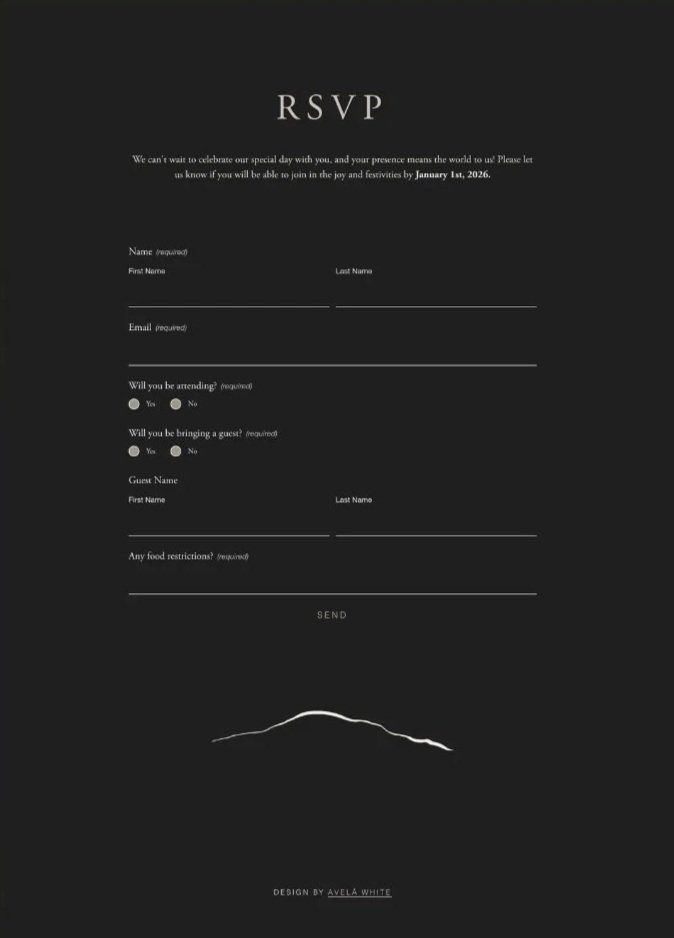
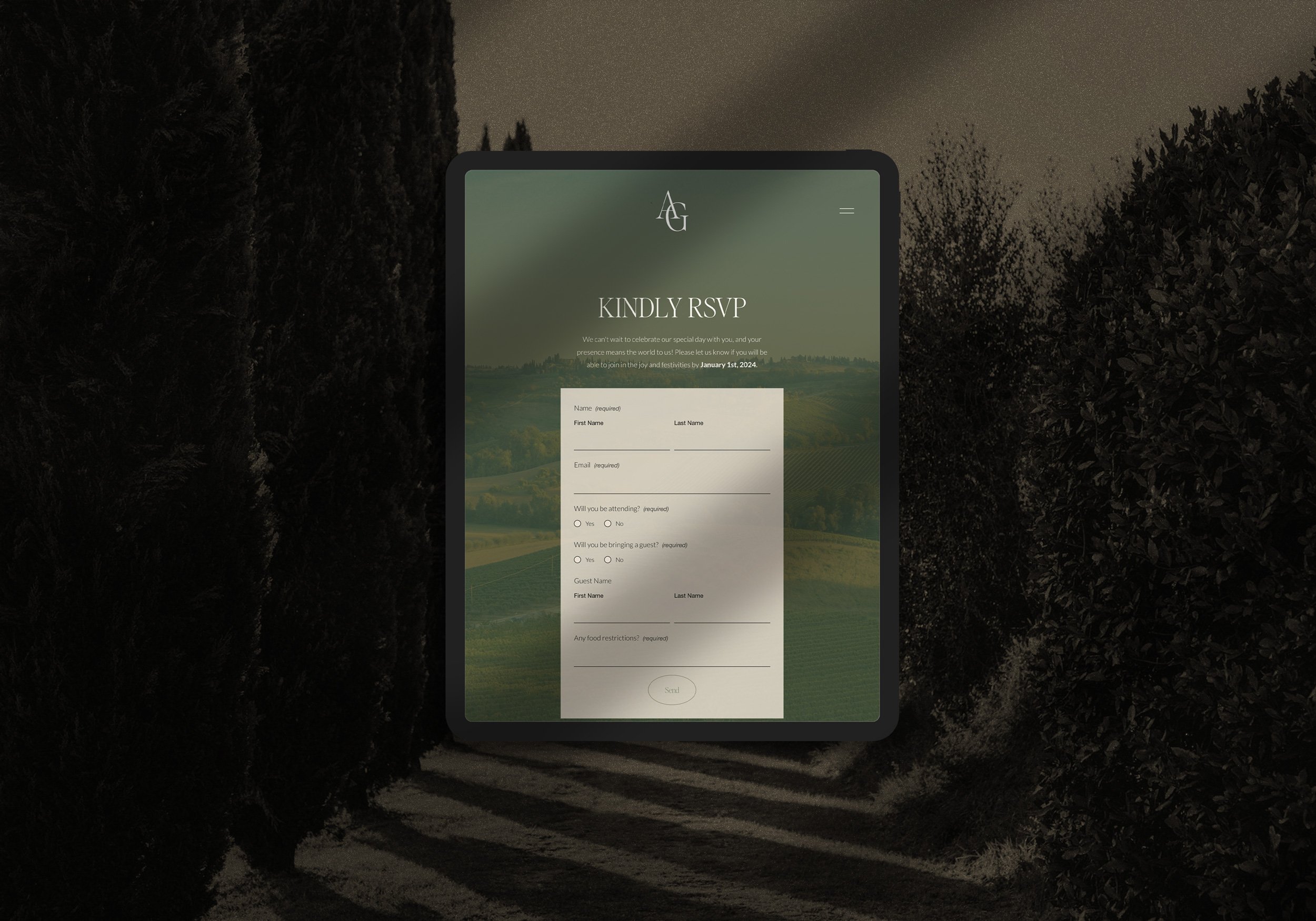
Semi-Custom Wedding Website Collection “Shiro”. RSVP Page.
Where to Start
read more