Your wedding website is the most visited page your wedding will ever have. Before the invitations arrive, before guests have seen the venue, before the day itself — your website is where people go to understand what is happening, what is expected of them, and what kind of celebration this is going to be.
Most couples underestimate it. They add a date, a venue, and an RSVP link, and consider the job done. But a well-structured wedding website does far more than communicate logistics. It makes your guests feel looked after. It reduces the volume of questions landing in your inbox. It reflects the care and intention behind the wedding itself.
This guide covers every page your wedding website could include — what each one is for, when it is worth adding, and how to think about the ones that will make the most difference for your guests.

How to think about structure
Not every wedding needs every page. The right structure depends on two things: the complexity of your event, and how much your guests need to know in advance. We think about wedding website pages in three tiers: essential (every wedding needs these), recommended (most weddings benefit from these), and optional (thoughtful additions that elevate the experience for the right wedding).
Essential pages — every wedding needs these

Home
Your names, your date, your venue, and a hero image that immediately sets the visual tone. This page should feel like a considered introduction, not a placeholder. If a guest lands here and feels nothing in particular, something has gone wrong.

Our Story
A dedicated page to share how you met, your relationship, and whatever of your journey you want to make public. This is one of the most-read pages on any wedding website — it gives guests context, warmth, and something to talk about before they arrive.
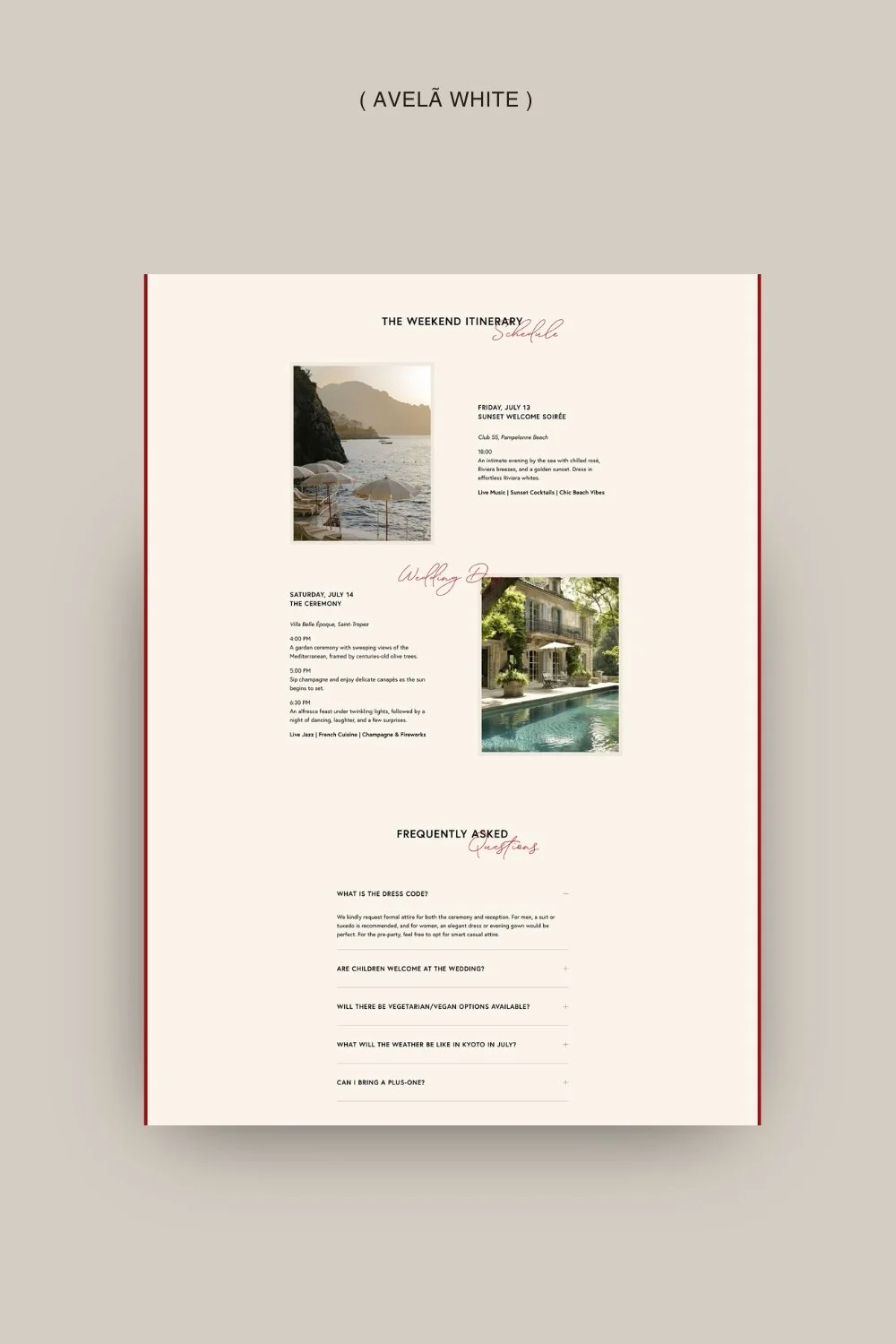
Schedule
A dedicated page to share how you met, your relationship, and whatever of your journey you want to make public. This is one of the most-read pages on any wedding website — it gives guests context, warmth, and something to talk about before they arrive.

Travel & Accommodation
Driving directions, the nearest train station, parking arrangements, recommended taxis, and accommodation options at different price points. This page alone saves a remarkable number of messages in the weeks before the wedding.

RSVP
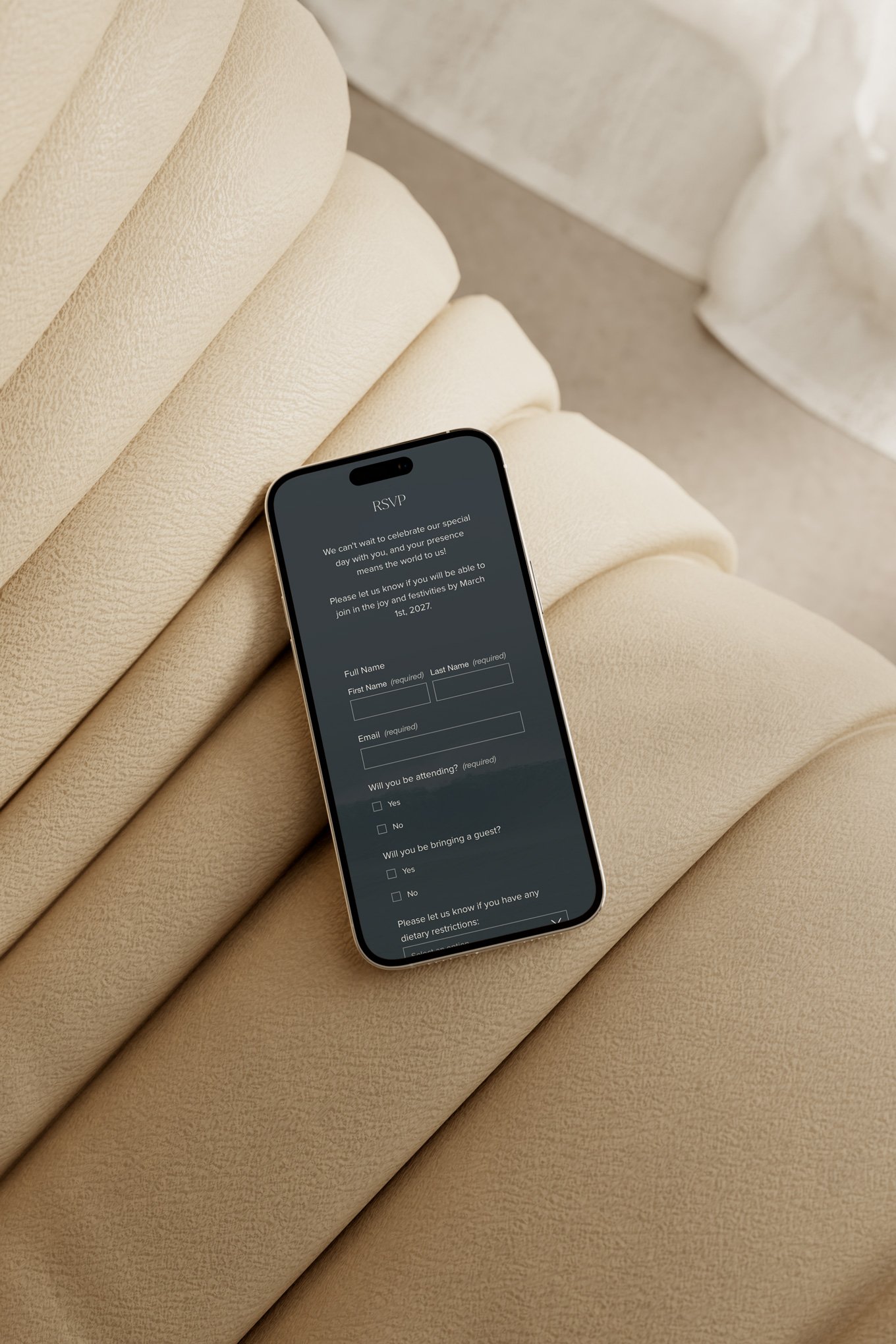
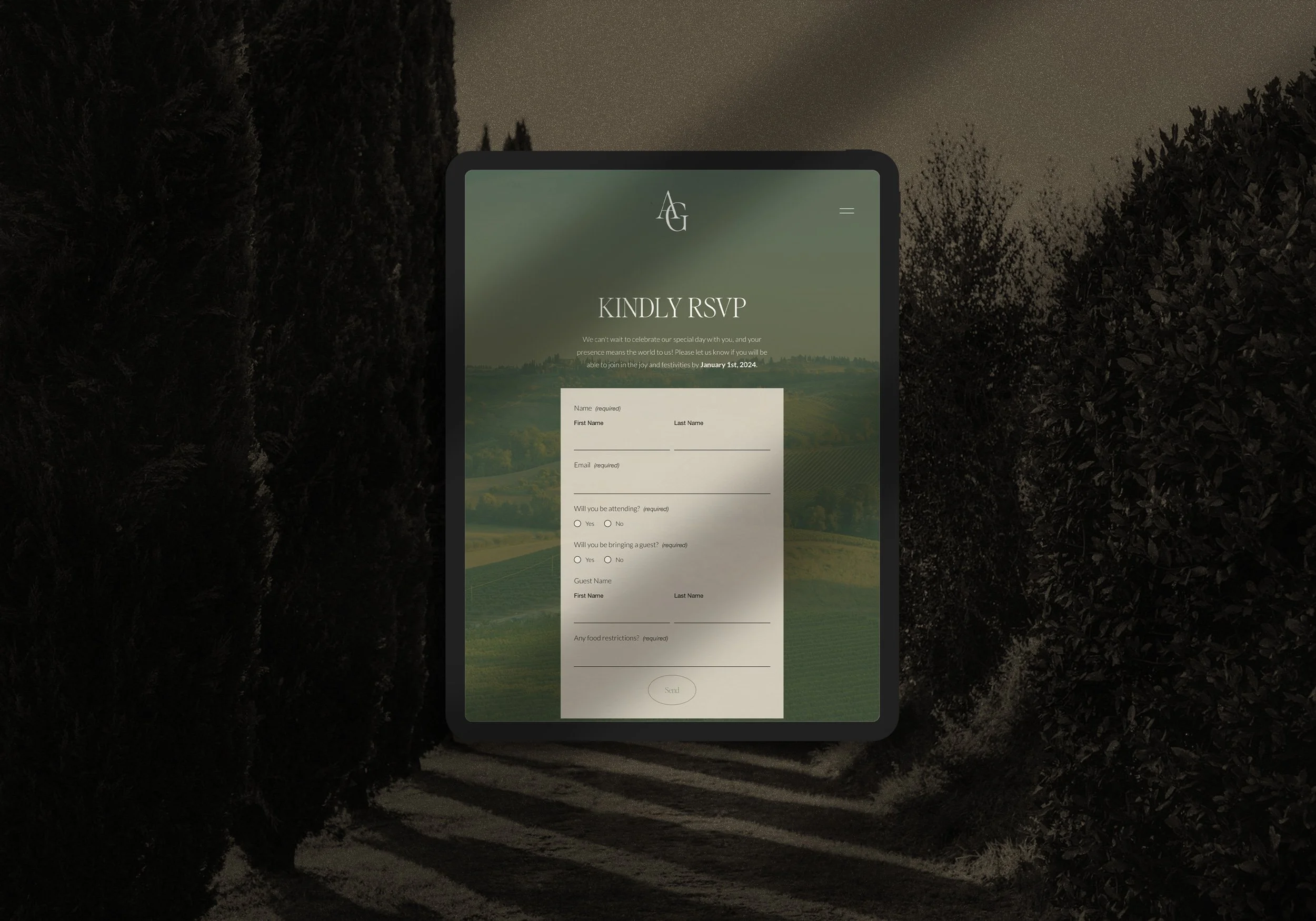
A standalone RSVP page with a proper form — not a link buried at the bottom of a long page. Attendance confirmation, meal choice, dietary requirements, plus-one, and anything else you need to know, clearly presented and easy to complete on a mobile.
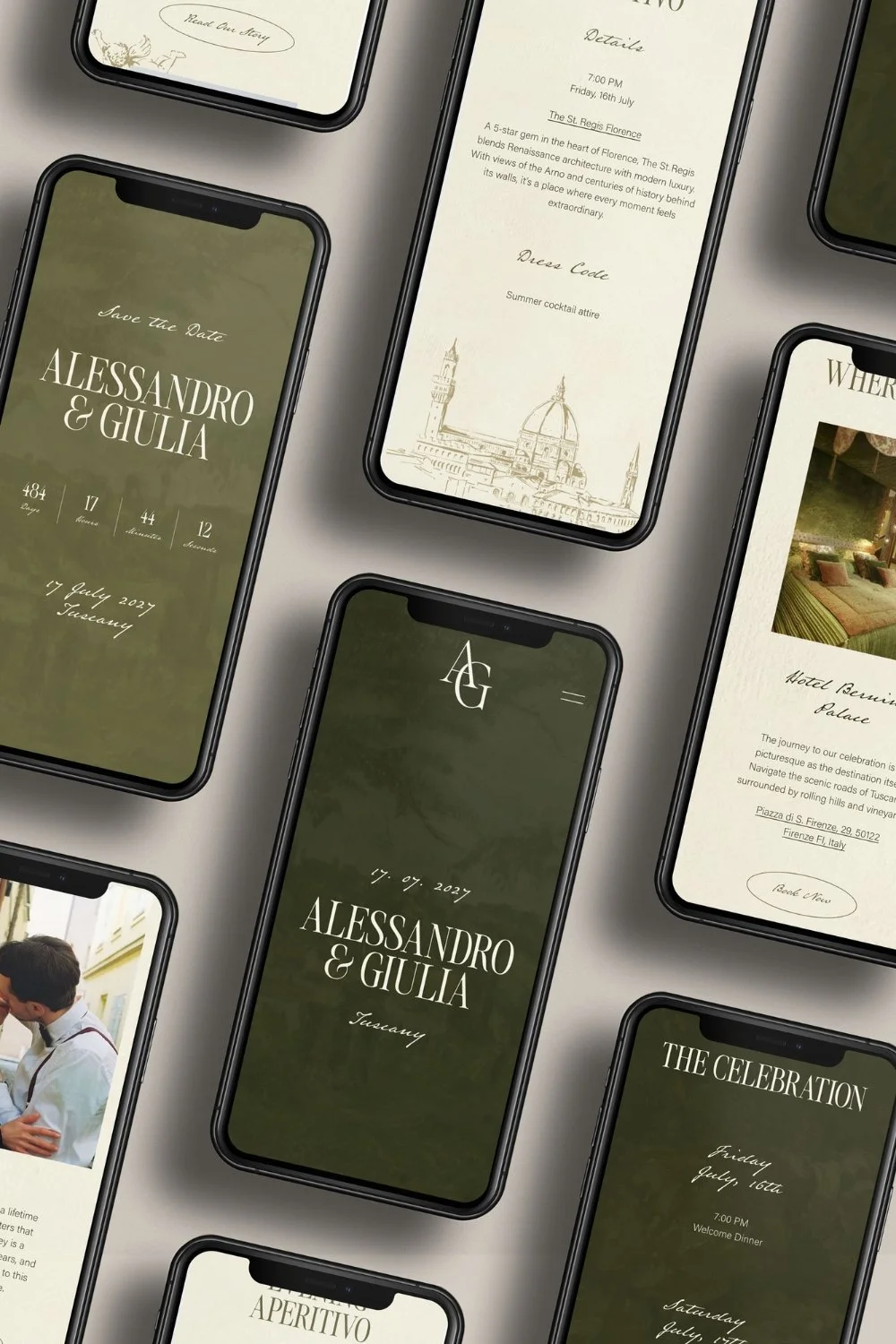
FAQs
Every wedding generates a predictable set of questions. Dress code. Parking. Whether children are welcome. A dedicated FAQ page answers all of these once, clearly, and removes them from your inbox entirely.
Recommended pages — most weddings benefit from these
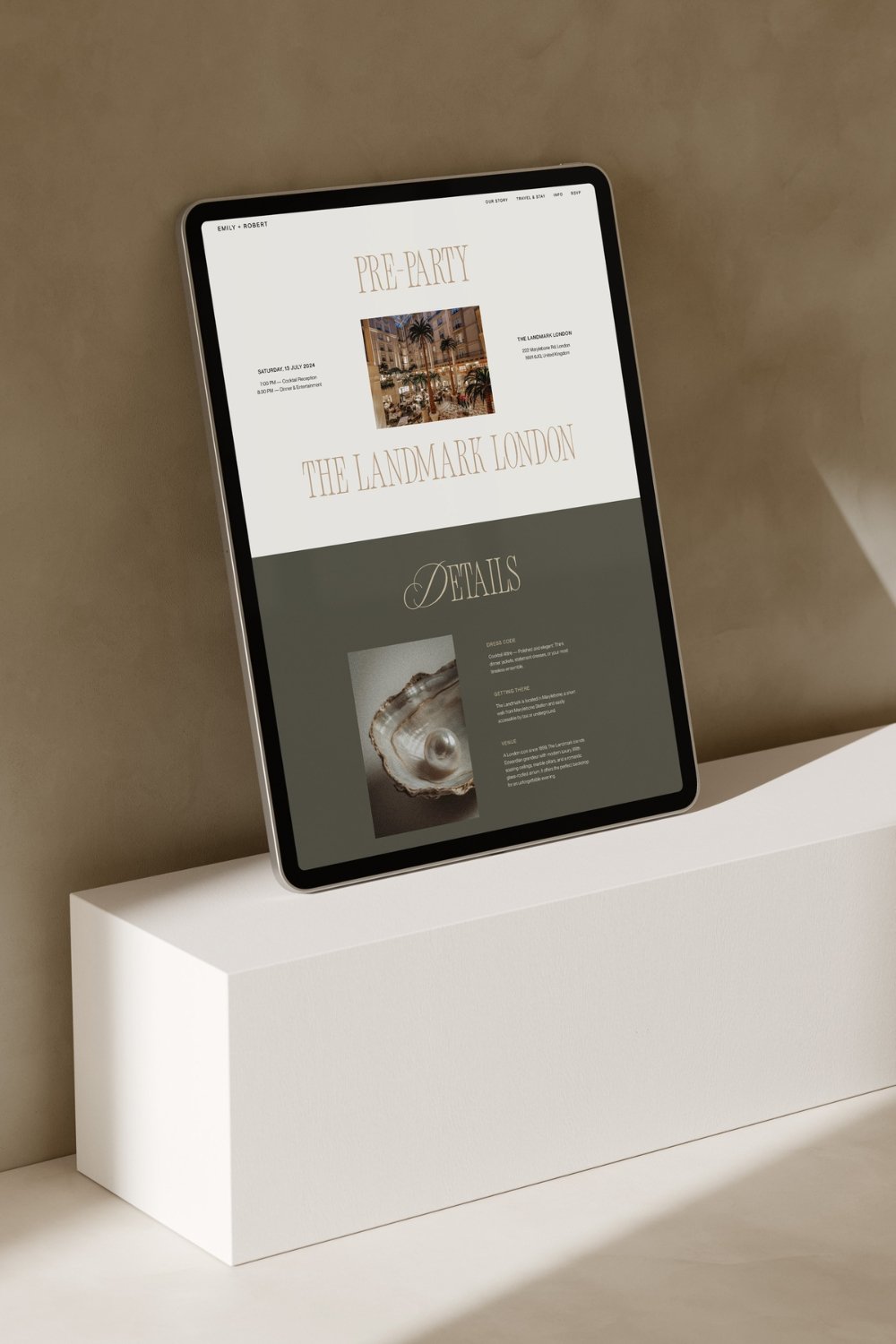
Wedding Party
A page introducing your bridesmaids, groomsmen, and any other members of your wedding party. Adds personality and warmth, particularly for mixed guest lists where not everyone knows the bridal party.
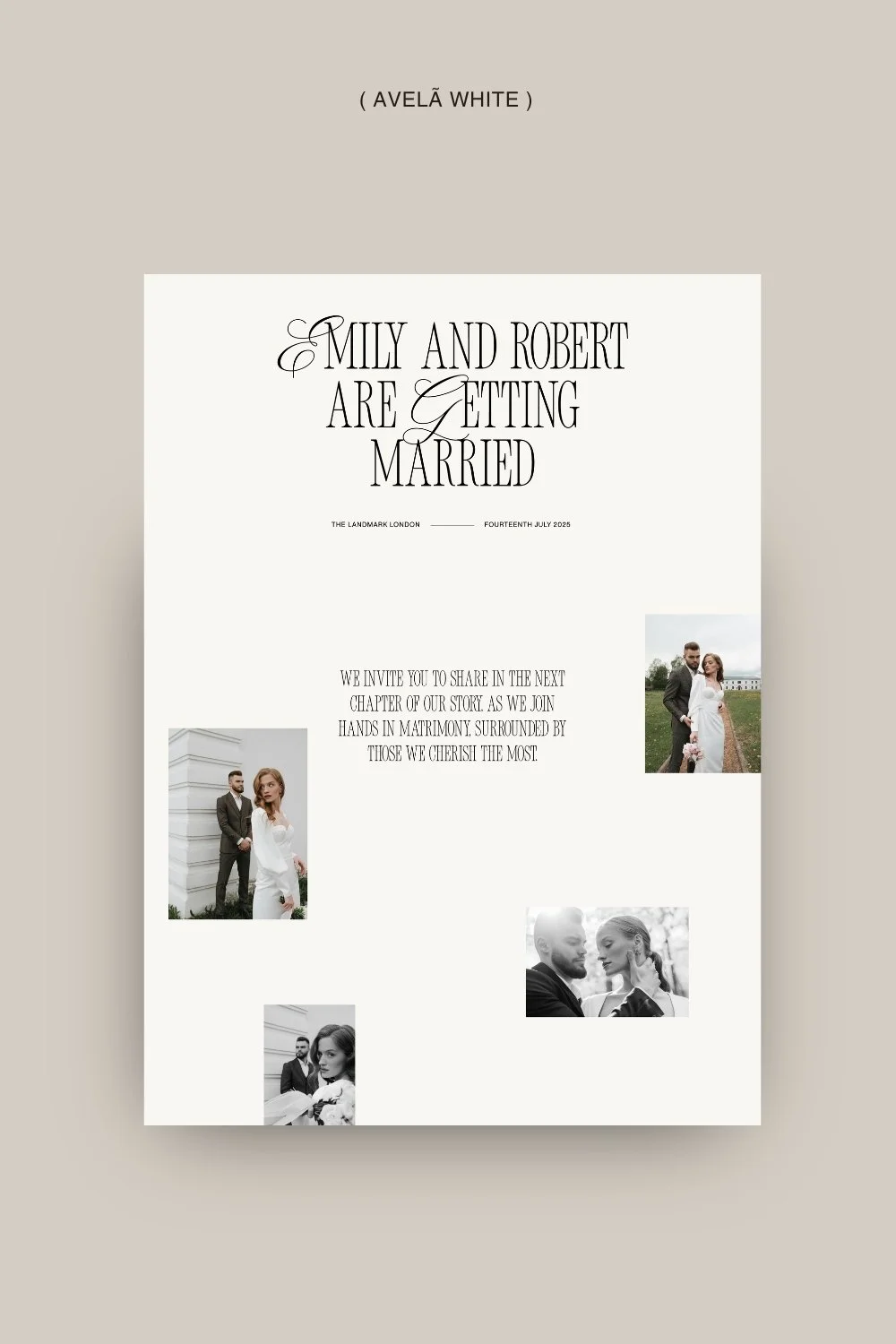
Gallery
A curated selection of images — your engagement shoot, pre-wedding photographs, venue images — that gives the website a more editorial, immersive quality. Update it with ceremony and reception images after the wedding to transform it into a beautiful keepsake.
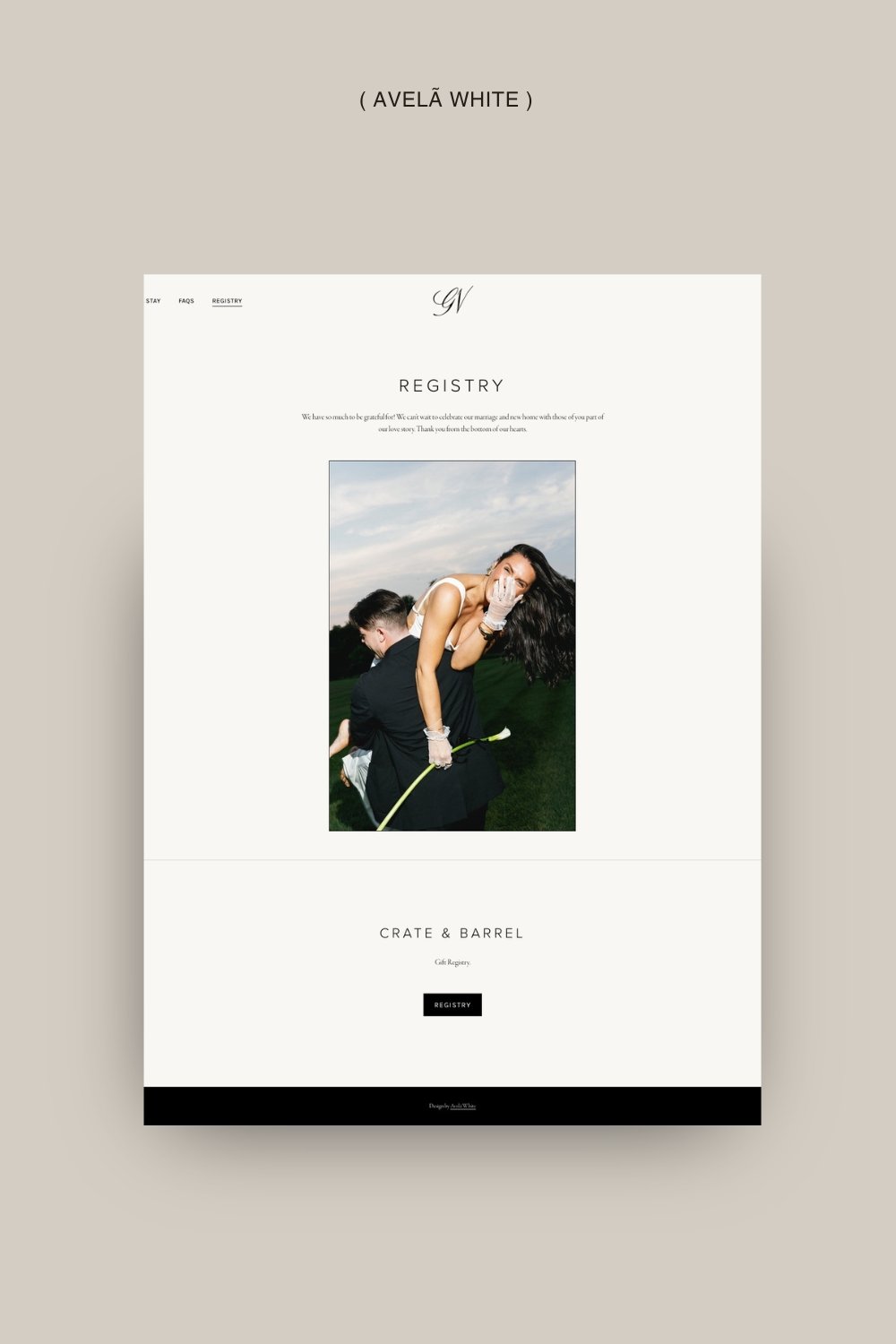
Registry
Links to your gift list, honeymoon fund, or charitable donations. Best kept understated — a quiet, graceful link rather than a prominently featured section.
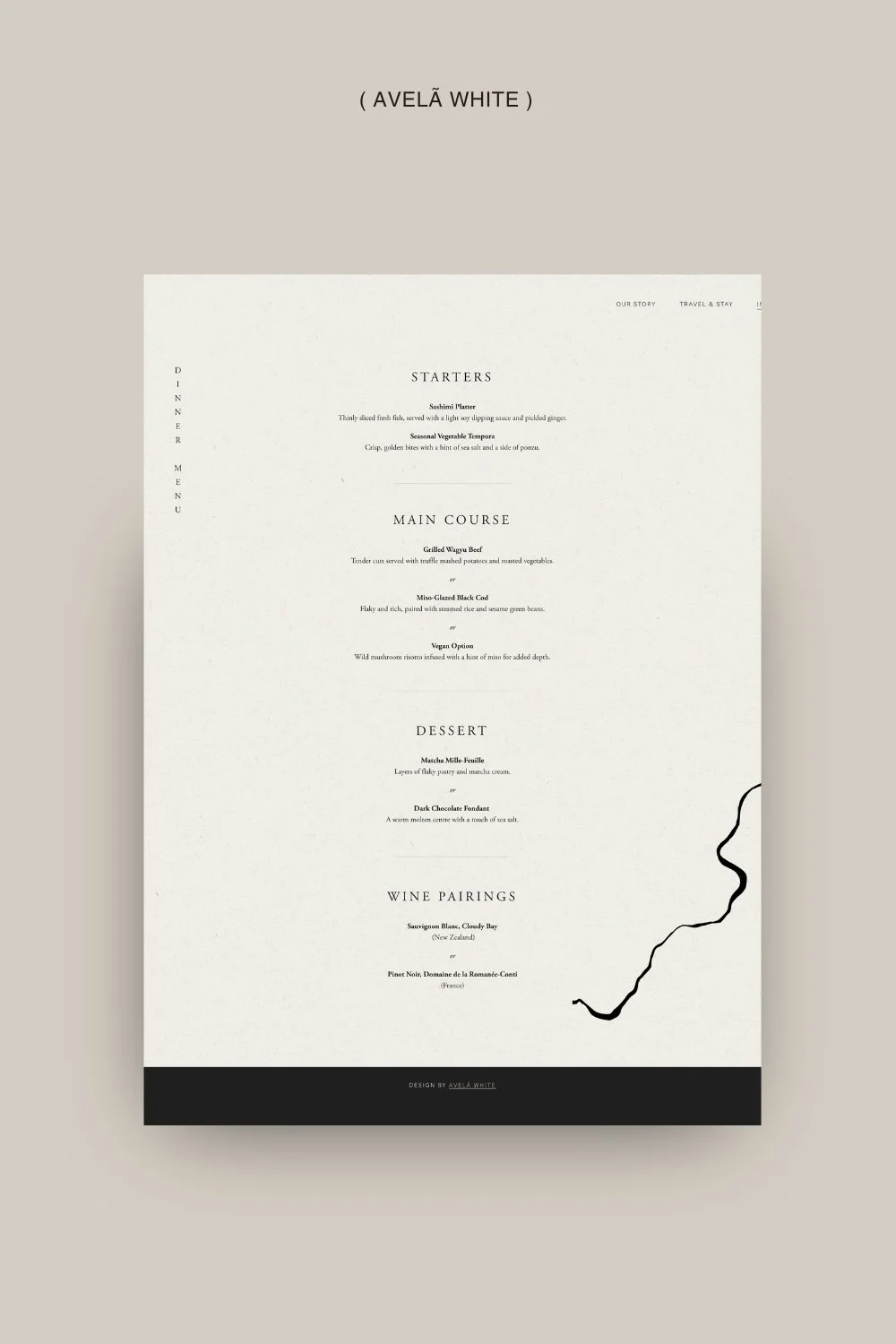
Menu
A page dedicated to the wedding menu. More common for formal sit-down dinners, but a lovely touch for any wedding where the food is a considered part of the experience. Sharing the menu in advance creates anticipation, and guests with dietary requirements will appreciate knowing what has been arranged.
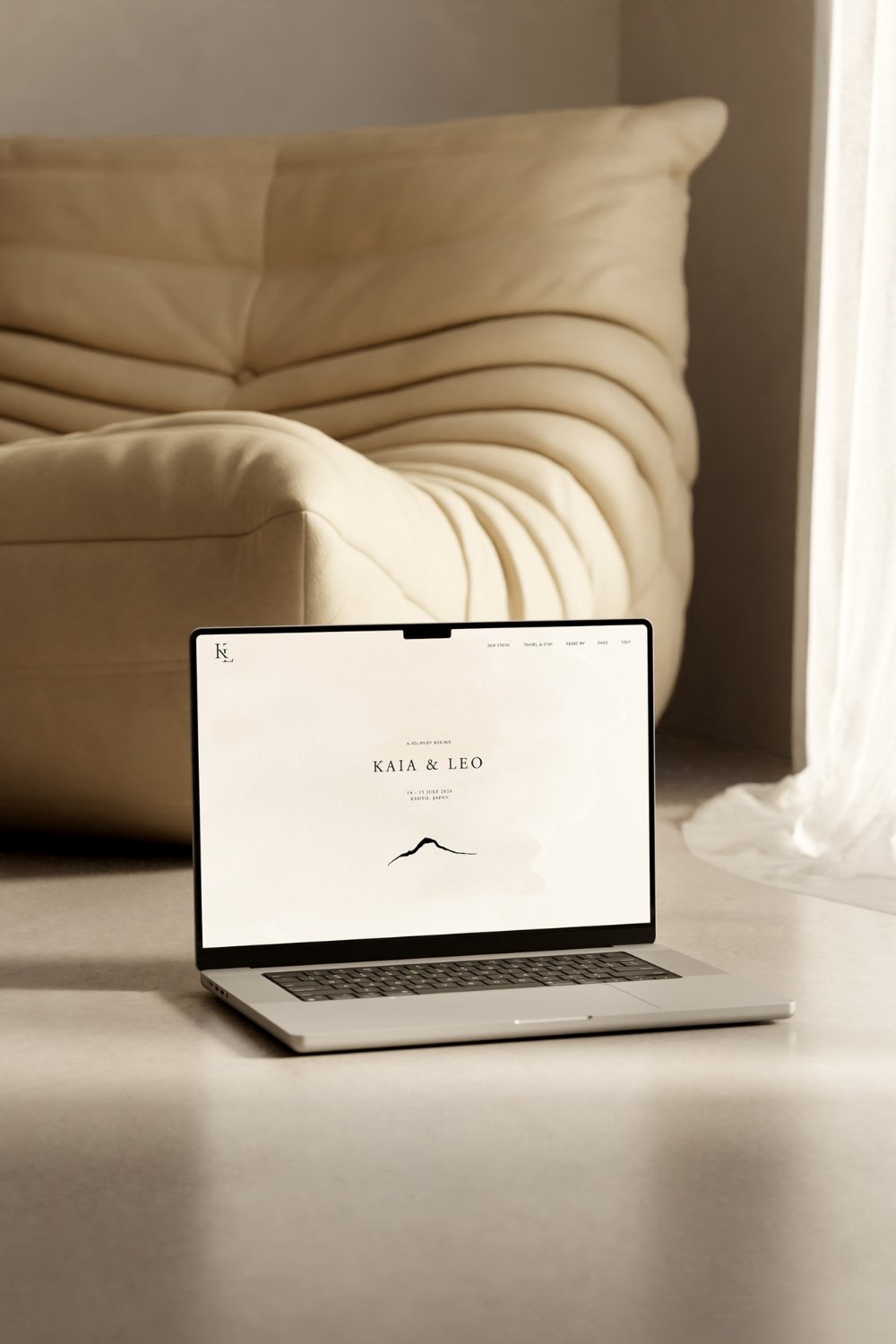
Guestbook
A digital space for guests to leave messages and well-wishes before and after the wedding. Requires a little moderation, but can become a genuinely lovely record of the people who celebrated with you.
Destination-specific pages — build until it is genuinely useful
For destination weddings, international guest lists, or any celebration that spans more than one day, the pages above are a foundation rather than a complete answer. The following additions transform a functional wedding website into something that genuinely looks after guests who are making a significant journey to be there.

Individual Event Pages
When your celebration spans multiple days or venues, each event deserves its own dedicated page. Welcome dinner on the Thursday evening. Ceremony and reception on Saturday. Farewell brunch on Sunday morning. Each page carries its own venue details, address, dress code, timings, and map.

Local Guide
Restaurant recommendations, things to do, where to swim, the best coffee, a market worth visiting. A curated list of genuine favourites, written in your own voice, tells guests far more than a comprehensive directory ever could — and says something about who you are.

Vendor List
Your photographer, planner, florist, hair and makeup artist, musicians, caterer. Publishing your vendor list before the wedding gives guests context about the team behind the day, makes it easy for them to tag the right people on social media, and is a warm acknowledgement of the professionals you have chosen to work with.
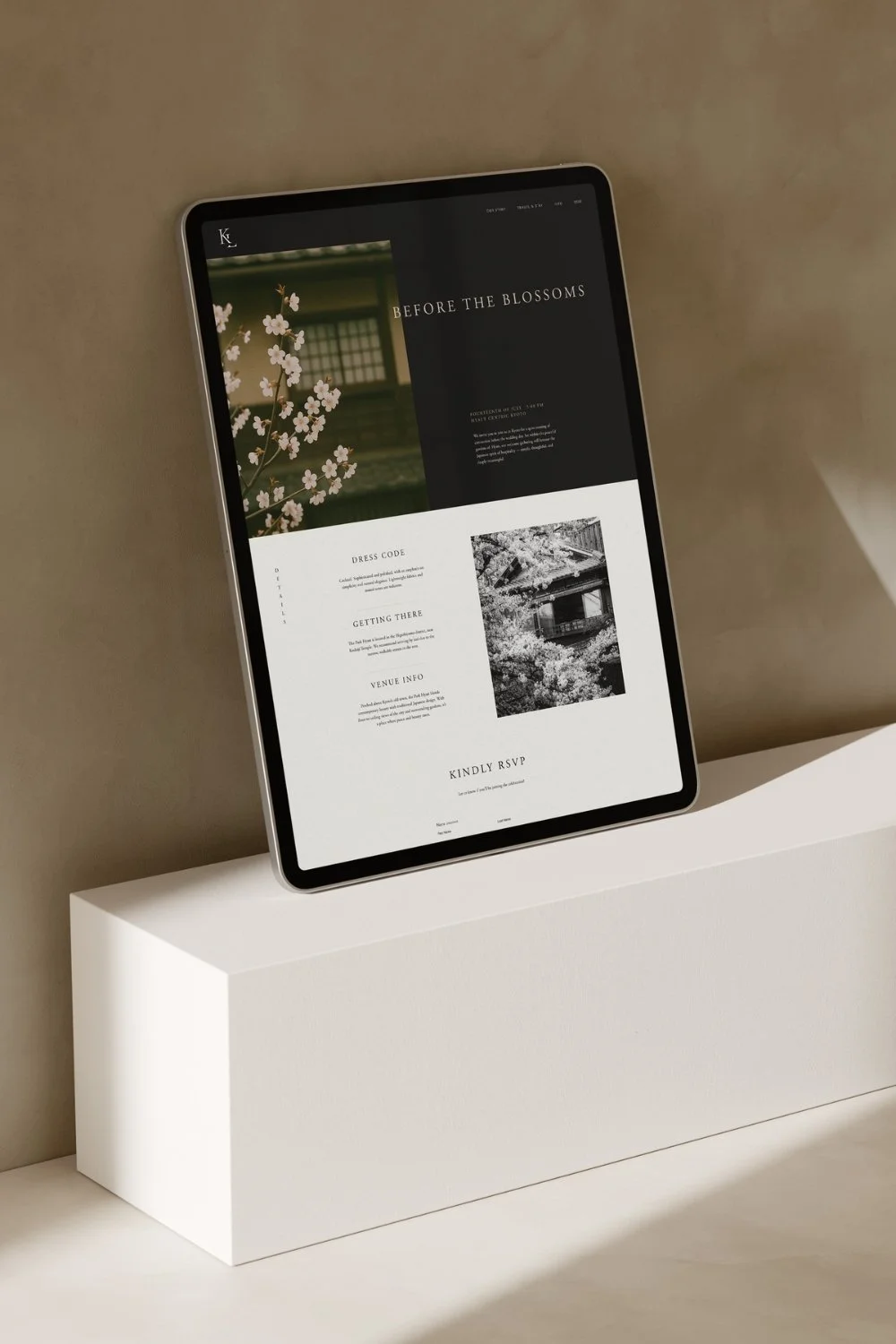
Day-Of Reminder Page
A temporary reminder page, published in the days immediately before the wedding — a clean, mobile-optimised summary of everything guests need to know right now. Transfer times and pick-up points. The day's schedule in brief. What to bring. The emergency contact number. It lives in the navigation for a few days and then quietly retires once the wedding is over. Guests who are navigating an unfamiliar location are grateful for it in a way that is disproportionate to how little effort it takes to create.
A note on navigation
The value of all these pages depends entirely on guests being able to find them. Keep your navigation labels simple and intuitive — the words guests would naturally use. Make sure every page is reachable within one click from anywhere on the website. And design with mobile in mind: the majority of your guests will visit your wedding website on their phone, often in a hurry.
How many pages does your wedding website need?
For a local wedding: five to six pages as a minimum. For a destination wedding or multi-day celebration: eight to twelve, depending on the complexity of the events and the distance your guests are travelling.
The question to ask is not how few pages can I get away with, but what does my guest actually need to feel looked after. A wedding website that answers that question thoroughly, in a design that does justice to the celebration itself, is one of the best investments you can make in the experience of the people who matter most.
planning your wedding website and not sure where to begin?
At Avelã White, we design wedding websites that are as considered as the celebrations they represent — from five-page local weddings to fully bespoke destination builds.
read more